Schilthorn Precision Expertise & Capabilities in Tube Sheet Manufacturing

In shell-and-tube heat exchangers, the tube sheet is the structural core that secures and aligns hundreds of tubes with absolute accuracy. Each plate operates under high temperature, pressure, and corrosive service conditions where even a minor deviation can lead to leakage or failure.

At Schilthorn Precision Engineering Pvt. Ltd., precision is built into every stage of manufacturing. With over 18 years of machining experience, we produce ASME- and TEMA-compliant tube sheets that deliver consistent dimensional stability, corrosion resistance and long-term mechanical integrity across power, process and marine sectors. Every micrometre of accuracy directly translates into exchanger reliability

Why Tube Sheet Manufacturing Demands Accuracy 

A tube sheet is a thick, perforated plate that anchors and isolates the tube bundle, maintaining a pressure-tight barrier between shell-side and tube-side fluids. Each drilled hole, groove and sealing surface must adhere to strict GD&T and surface-finish requirements to manage thermal expansion and pressure differentials. The life of a heat exchanger depends directly on how precisely this component is machined.

Schilthorn’s facility integrates all key operations under one roof, drilling, grooving, facing and milling performed on HAAS multi-axis VMCs for stable, repeatable accuracy. Every part undergoes CMM-verified inspection and surface-finish measurement to validate conformance with design drawings and tolerance charts. Through CAD/CAM-based programming, calibrated tooling and process traceability, each tube sheet achieves consistent geometry, perfect hole alignment and controlled surface integrity, batch after batch.

Key Technical Capabilities

Parameter Specification Capability Advantage
Max Diameter Up to 1000 mm Suited for large shell-and-tube exchangers
Thickness Range 24 – 50 mm Delivers strength with machining stability
Hole Precision ±100 µm Maintains accurate tube alignment
Surface Finish Up to 0.8 Ra(µm) Enables leak-proof gasket seating
Grooves Up to 9 Supports reliable sealing performance
Machining Operations Drilling / Grooving / Milling / Facing Complete in-house control and repeatability

Every machining cycle is monitored for tool wear, spindle temperature and dimensional drift, ensuring uniformity from first piece to final inspection.

Schilthorn’s Material Capabilities in Tube Sheet Manufacturing

Schilthorn machines tube sheets from a wide range of ferrous, non-ferrous and cladded materials, selected based on service environment, corrosion behaviour and thermal requirements. Each material undergoes certified traceability and controlled machining parameters to maintain dimensional stability and metallurgical integrity.

Material Type Grades / Composition Applications
Carbon Steel & Boiler Quality Steel SA 516 Gr. 60 / 70, IS 2062 Standard process and power applications
Stainless Steel SS 304, 304L, 316, 316L, 321 General corrosion-resistant and food-grade service
Duplex & Super Duplex UNS S31803, S32750 Seawater and high-chloride conditions
Cu-Ni Alloys 70/30, 90/10 Marine and condenser service
Cladded Tube Sheets Explosion-bonded / Weld overlay Combines strength of base metal with corrosion-resistant layer
High-Nickel & Super Alloys Inconel, Monel, Hastelloy High-temperature and chemical-process equipment

All materials are supplied with Mill Test Certificates (MTC) and verified through visual, dimensional and inspection prior to machining. Each conforms to relevant ASME and TEMA standards, ensuring reliability and consistency in every Schilthorn-manufactured tube sheet.

Industrial Sectors Trusting Schilthorn’s Engineered Tube Sheets

Schilthorn’s precision-machined tube sheets are integral to the performance and reliability of heat exchangers, condensers and process equipment across a variety of industries. Each design is engineered to meet application-specific demands for temperature, pressure and corrosion resistance such as:

  • Power Generation: Steam condensers, feedwater heaters and reboilers operating under high-pressure, high-temperature cycles.
  • Petrochemical & Refinery: Process condensers, gas coolers and hydrocarbon exchangers exposed to aggressive process media.
  • Marine & Offshore: Seawater cooling and desalination systems requiring resistance to saline and chloride-rich environments.
  • HVAC & Chillers: Condensers and evaporators designed for efficient thermal transfer and low maintenance.
  • Pharmaceutical & Process Industries: Reactors and solvent-recovery units where cleanability and tube alignment are critical.

Each application benefits from accurate hole geometry, uniform surface finish and secure gasket retention, ensuring consistent performance throughout extended operational life.

Why Choose Schilthorn Precision for Your Tube Sheets Needs

With over 18 years of expertise in precision engineering, Schilthorn Precision Engineering Pvt. Ltd. manufactures ASME- and TEMA-compliant heat exchanger tube sheets designed to perform reliably under demanding operating conditions. Our integrated facility brings together explosion-bond and weld-overlay cladding, multi-axis CNC machining and CMM-verified dimensional inspection within a single controlled workflow achieving ±100 µm tolerances and 0.8 Ra surface finishes with repeatable accuracy. Certified to ISO 9001 and AS9100, every component undergoes stringent quality control, ensuring that each Schilthorn-manufactured tube sheet meets exacting international standards for performance, safety and durability.

What Is a Shell and Tube Heat Exchanger?

A shell and tube heat exchanger is among the most widely used and robust types of industrial heat exchangers. It enables efficient heat transfer between two fluids at different temperatures without allowing them to mix. One fluid flow through a bundle of tubes, while the other passes around these tubes inside a cylindrical shell, separated by solid metal Valves. These exchangers are capable of operating under high pressure, elevated temperature and corrosive environments, making them essential in power generation, petrochemical, marine and HVAC applications.

Their long-term reliability depends entirely on the precision and machining accuracy of their core components the tube sheets, tubes, baffles and shell. Each element must meet ASME and TEMA dimensional and metallurgical standards to ensure mechanical integrity and thermal efficiency. Even a micron-level deviation in hole spacing or surface finish can cause leakage, vibration, or reduced performance.

How a Shell and Tube Heat Exchanger Works

A shell and tube exchanger operates through two separate circuits:

  • Tube-side fluid: flows through the internal tubes generally the process fluid that needs heating or cooling.
  • Shell-side fluid: moves around the outer surfaces of the tubes inside the shell.

Heat transfers through the tube walls by conduction carries energy between the fluids. The fluids remain isolated, ensuring safe and controlled energy exchange.

Heat Exchange Flow Orientation

To achieve optimal efficiency, exchangers are configured in one of three flow types:

  • Parallel Flow: Both fluids travel in the same direction. Simple in design but less efficient.
  • Counterflow: Fluids move in opposite directions, allowing the cold fluid to approach the hot outlet temperature the most efficient thermal configuration.
  • Crossflow: Fluids move perpendicular to each other, often used in compact or multi-pass exchangers.

A properly defined flow arrangement, combined with precise machining, ensures consistent heat transfer and minimal pressure loss.

Materials Used in Shell and Tube Heat Exchangers

Material Type Grades / Specifications
Aluminium Alloys 6061, 5083, 6063, 5070, 2024, 6082
Brass CuZn39Pb3, CuSn7ZnPb-C, 3604
Bronze Pb102
Stainless Steel (SS) SS304, SS316, SS316L, SS410
Mild Steel (MS) EN1A, EN8, EN9, SAE1010, IS 2062

Key Components of a Shell and Tube Heat Exchanger

A shell and tube heat exchanger’s performance depends on the integrity of every component each one designed, machined and assembled to withstand continuous thermal and mechanical stress.

  1. Tube Sheet: A thick, perforated plate that secures and seals the tubes. It prevents mixing between shell-side and tube-side fluids and maintains mechanical stability under pressure and temperature differentials.
    Tube sheets are usually made from carbon steel, stainless steel, or cladded alloys for corrosion resistance. Hole tolerances (±100 µm) and surface finish (≤ 0.8 Ra) are critical for achieving leak-proof expansion or weld joints.
  2. Tubes: Tubes carry the process fluid and form the main heat transfer surface. They can be seamless or welded, straight or U-shaped and are typically made from SS 304/316L, Cu-Ni 90/10 or 70/30, or titanium.
    Smooth inner and outer surfaces reduce fouling and improve thermal conductivity. Material compatibility between tubes and tube sheet is essential to avoid galvanic corrosion and fatigue.
  3. Shell: The cylindrical outer vessel holds the shell-side fluid and directs its flow over the tubes. It must comply with ASME Section VIII pressure vessel codes. Material selection often carbon steel or stainless steel depends on process media, temperature and pressure. Dimensional accuracy and weld integrity are vital to maintain structural performance under operating stress.
  4. Baffles: Baffles control the flow pattern of the shell-side fluid, increasing turbulence for better heat transfer while supporting the tubes. Common designs include segmental, helical and disk-and-doughnut types. Their spacing and alignment directly influence vibration control; pressure drop and maintenance intervals.
  5. Heads and Nozzles: Heads (end covers) distribute the tube-side fluid evenly. Nozzles connect the exchanger to process piping and must withstand varying pressures and flow rates.
    Head configuration depends on exchanger type fixed, floating or U-tube to accommodate expansion and facilitate cleaning.

Applications of Shell and Tube Heat Exchangers Across Industries

The shell and tube heat exchanger is a versatile and robust thermal system used for heating, cooling, condensation and vaporization across a wide range of industrial processes. Its mechanical strength, serviceability and adaptability make it one of the most trusted configurations for critical applications.

  • Power Generation: In power plants, these exchangers operate as steam condensers, boiler feedwater heaters and turbine oil coolers. They maintain high thermal efficiency under varying loads, ensuring consistent energy recovery and minimal thermal losses in closed-loop systems.
  • Petrochemical and Refinery: Refineries and petrochemical units rely on them for reboilers, process heaters, hydrocarbon coolers and gas condensers. Built to ASME and TEMA Class R standards, they can handle high pressures, temperature gradients and corrosive media while maintaining structural integrity.
  • Marine and Offshore: Marine systems use shell and tube exchangers for seawater cooling, desalination and ballast water treatment. Tubes made from Cu-Ni or duplex stainless steel offer corrosion resistance and biofouling protection under saline conditions.
  • HVAC and Chillers: In HVAC and refrigeration, they serve as condensers, evaporators and brine coolers. Their compact configuration ensures stable thermal control and efficient fluid exchange in commercial and industrial chilling systems.
  • Pharmaceuticals and Chemicals: Used for reactor temperature control, solvent recovery and process heating, these exchangers provide precise thermal regulation. Their cleanable construction and steady heat transfer make them ideal for GMP-regulated environments.

A shell and tube heat exchanger is one of the most dependable and efficient thermal systems used across industries, capable of handling high temperatures, pressure variations and corrosive media in applications such as power generation, petrochemicals, marine, HVAC and pharmaceuticals. Its reliability and performance depend on the precision of tube sheets, tubes, shells, baffles and nozzles each manufactured to ASME and TEMA standards. Through accurate machining, material integrity and rigorous quality inspection, these exchangers achieve consistent heat transfer, mechanical strength and long-term operational efficiency, making precision engineering the true foundation of their performance

Why Choose Schilthorn Precision for Your Shell & Tube Heat Exchanger?

With over 18 years of expertise in precision engineering, Schilthorn Precision Engineering Pvt. Ltd. manufactures ASME- and TEMA compliant shell and tube heat exchangers and components built for consistent performance under demanding operating conditions. Our integrated facility brings together weld-overlay and explosion-bond cladding, multi-axis VMC & CNC machining and CMM-verified inspection within a single controlled workflow achieving ±100 µm tolerances and 0.8 Ra surface finishes. Certified to ISO 9001 and AS9100, every component is produced under stringent quality controls to ensure dimensional accuracy, corrosion resistance and long-term reliability across industrial applications.

What Is Tube Sheet Cladding in Heat Exchangers?

In a shell-and-tube heat exchanger, the tube sheet is the plate that supports and seals the ends of hundreds of tubes. It separates the shell-side and tube-side fluids, ensuring heat transfer takes place safely without cross-contamination. During operation, this plate is exposed to high temperatures, pressure fluctuations and aggressive fluids that can cause corrosion or pitting. When the base material alone cannot withstand these conditions, tube sheet cladding is applied to extend service life and maintain reliability.

What Is Tube Sheet Cladding?

A tube sheet is a thick, perforated plate that anchors tubes and prevents cross-contamination between process fluids. When exposed to aggressive media such as seawater, condensate, or acidic vapours, even high-grade carbon or alloy steels begin to corrode.

Tube sheet cladding solves this challenge by metallurgically joining a corrosion-resistant alloy layer onto the base metal.

  • The base metal provides mechanical strength and structural stability.
  • The cladded layer shields against chemical attack, erosion and high-temperature oxidation.

This dual-metal construction offers the durability of exotic alloys at a fraction of their cost delivering optimal strength-to-corrosion resistance for long-term exchanger performance.

cladded tube sheet

Different of Tube Sheet Cladding Methods.

Different cladding processes are used depending on size, material and service conditions.

  • Explosion Bonding: A controlled detonation propels the cladding plate onto the base metal at supersonic velocity.
    The impact forms a solid-state metallurgical bond without melting either layer. This technique is ideal for large plates and for joining dissimilar metals like carbon steel with stainless steel, titanium, or nickel alloys.
  • Weld Overlay Cladding: A corrosion-resistant alloy is welded over the surface of the base plate using TIG, MIG, or submerged-arc welding. It creates a fusion bond and is often used for specific sections like tube joints or sealing faces that require added protection.
  • Roll Bonding (Hot Rolling): Both metals are heated and passed through heavy rollers under high pressure, creating a uniform, solid-state bond across the surface. This process ensures even thickness and excellent adhesion between layers.
  • Laser or Thermal Spray Coating: A fine metal powder is melted onto the surface using a laser or plasma torch.
    Although thinner than traditional cladding, this process is used for repair work or smaller components requiring precise control.

Materials Used for Tube Sheet Cladding

Selecting the right combination of base and cladding materials is critical to achieving the perfect balance of mechanical strength, corrosion resistance and thermal compatibility in a heat exchanger. Each layer serves a distinct function: the base metal carries the structural load, while the cladding alloy provides long-term protection against chemical, thermal and mechanical degradation. The choice depends on factors such as process fluid composition, temperature, pressure and maintenance accessibility.

  1. Base Metals: Base plates are selected primarily for their mechanical strength, weldability and cost-efficiency. They form the structural backbone of the heat exchanger tube sheet, designed to sustain internal pressure, flange loads and thermal expansion without distortion.
    • Common Base Metals Include:
      • Carbon Steel (SA 516 Gr. 70): The most widely used boiler-quality steel due to its excellent weldability, toughness and strength under high pressure. It provides the rigidity needed to hold hundreds of tubes in alignment during service.
      • Boiler-Quality Steel (BQ Steel): Offers superior resistance to deformation at elevated temperatures, making it suitable for steam condensers and feedwater heaters.
      • Mild and Low-Alloy Steels: Used when moderate strength and machinability are required. Low-alloy steels like SA 387 provide improved creep and fatigue resistance in thermal cycling environments.

Base materials are typically chosen for strength and structural integrity, while corrosion protection is achieved through a bonded alloy layer reducing overall cost without sacrificing performance.

  1. Cladding Alloys: The cladded surface directly faces the process fluid, making corrosion and temperature resistance the top priorities. The cladding alloy must remain chemically stable under operating conditions and compatible with both the base metal and process media.
    • Stainless Steels (304L, 316L): 304L provides reliable corrosion resistance in mildly corrosive environments such as freshwater and cooling-water systems. 316L, enriched with molybdenum, offers enhanced pitting and crevice corrosion resistance, making it the industry standard for chemical and refinery tube sheets.
    • Duplex and Super Duplex Stainless Steels: Combine the strength of ferritic steels with the corrosion resistance of austenitic grades. Ideal for chloride-rich seawater and offshore applications, resisting stress corrosion cracking and localized attack.
    • Nickel-Based Alloys (Inconel 625, Inconel 825, Monel 400): Maintain exceptional corrosion resistance in acidic and high-temperature environments, such as urea reactors, sour-gas coolers and hydrocarbon reformers. Inconel 625 and 825 resist oxidation and carburization up to 1000°C, while Monel 400 performs exceptionally in brine and caustic media.
    • Copper-Nickel Alloys (Cu-Ni 70/30, Cu-Ni 90/10): Favoured for marine condensers, desalination plants and heat exchangers using seawater. These alloys offer natural biofouling resistance and excellent thermal conductivity, maintaining efficient heat transfer under continuous operation.
    • Titanium and Titanium Alloys: Provide near-total resistance to chloride-induced corrosion, making them indispensable for seawater cooling, desalination and high-purity chemical systems. Titanium cladding ensures longevity even under extreme pH and oxidizing conditions. 

Material Pairing in Tube Sheet Cladding:

Choosing the right base cladding combination ensures both economic efficiency and long-term durability:

Base Metal Cladding Alloy Application
Carbon Steel 316L Stainless Steel Refineries, chemical plants
Carbon Steel Copper-Nickel (90/10) Marine condensers, desalination
Carbon Steel Inconel 625 High-temperature, acidic media
Low-Alloy Steel Duplex Stainless Offshore cooling systems
Boiler-Quality Steel Titanium Power-generation condensers

After material bonding via weld overlay cladding, explosion bonding, or roll bonding the tube sheet undergoes precision machining, ensuring ±100 µm tolerance and 0.8 Ra surface finish. Each plate is tested for metallurgical integrity, bond strength and corrosion resistance under simulated service conditions.

Why Choose Schilthorn Precision for Your Heat Exchanger Tube Sheets?

With over 18 years of specialized experience in precision engineering, Schilthorn Precision Engineering Pvt. Ltd. is a trusted manufacturer of ASME and TEMA compliant heat-exchanger tube sheets that deliver measurable performance under demanding operating conditions. Our facility integrates weld-overlay and explosion-bond cladding, multi-axis CNC machining & CMM-verified inspection under one controlled workflow to achieve ±100 µm tolerances and 0.8 Ra surface finishes. Backed byISO 9001 and AS9100 certifications, every component we produce undergoes rigorous Quality Standards.

Choosing the Right Tube Sheet Material for Your Heat Exchanger

In every shell-and-tube heat exchanger the tube sheet is the structural backbone that determines whether the unit operates reliably or fails prematurely. A tube sheet is a thick, precision-drilled plate that anchors hundreds or even thousands of tubes in exact alignment. Beyond mechanical support, it serves as a barrier between shell-side and tube-side fluids ensuring no cross-contamination even under high pressure or corrosive service conditions.

The performance and service life of an exchanger depend heavily on the engineering and machining accuracy of its tube sheet. Any deviation in hole tolerance, tube pitch, ligament efficiency or surface finish can result in leakage, tube vibration and reduced heat transfer efficiency. Tube sheets are always manufactured as per design drawings and ASME/TEMA codes, using materials suited to the operating environment. Correct selection ensures the tube sheet withstands operational demands across industries such as power generation, petrochemicals, marine cooling and HVAC systems.

ENGINEERING REQUIREMENTS FOR TUBE SHEET MATERIALS:

Selecting the right material for a tube sheet is not simply a purchasing decision; it is an engineering requirement that determines whether the exchanger will operate reliably across its design life. The tube sheet must simultaneously resist mechanical stress, corrosion attack, thermal mismatch and metallurgical incompatibility with the tubes.

  • Mechanical Loads: Tube sheets must resist shell-side pressure, restrain tube forces and provide gasket seating. Material strength and thickness are calculated to maintain ligament efficiency and prevent deformation in high tube-count layouts.
  • Corrosion Resistance: Exposure to seawater, petrochemical brine or boiler feedwater makes tube sheets vulnerable to pitting, SCC and galvanic attack. Alloys such as stainless steel, cupro-nickel or cladded steels are often required for aggressive fluids.
  • Thermal Considerations: Operating across temperature gradients demands materials that limit stress from expansion mismatch between tubes and shell, reducing the risk of joint failure or leakage.
  • Compatibility with Tube Alloys: Tube-to-tube sheet joints (expanded or welded) require metallurgical compatibility. Cupro-nickel tubes need matching inserts or cladding, while titanium often requires dissimilar metal joining solutions.

Types of Tube Sheet Materials

Choosing the right tube sheet material is not just about cost it’s about reliability under temperature, pressure and corrosion. Below are the most commonly used materials for heat exchanger tube sheets, ranked from widely used to highly specialized based on industrial applications.

  1. Carbon Steel (CS): Most commonly used for standard heat exchangers, carbon steel offers excellent strength, rigidity and machinability at a low cost. It is ideal for clean or mildly corrosive services such as oil refineries, HVAC systems and utility cooling units. Its low corrosion resistance makes it unsuitable for seawater or acidic fluids unless cladded or coated. Many plants use carbon steel as the structural base for cladded or overlayed tube sheets.
  2. Cladded Stainless Steel: A cost-efficient alternative to solid stainless steel, cladded tube sheets combine a carbon steel base with a corrosion-resistant stainless-steel surface. This delivers both mechanical strength and corrosion resistance, making it the standard choice in refineries, petrochemicals and seawater cooling applications. The cladding bond must be uniform to prevent delamination under thermal stress, which is why precision machining and metallurgical validation are critical.
  3. Stainless Steel 304 / 316L: Among stainless grades, SS 304 and 316L are the go-to choices for pharmaceutical, food and chemical process industries due to their clean surfaces, weldability and moderate chloride resistance. Type 316L resists pitting and crevice corrosion better than 304, making it preferred for systems using treated water or mild brine, both can suffer SCC (Stress Corrosion Cracking) under high-chloride or high-temperature exposure.
  4. Duplex and Super Duplex Stainless Steels: When higher strength and chloride resistance are required, duplex and super duplex grades outperform standard stainless steels. They combine ferritic and austenitic properties, offering excellent SCC and pitting resistance even in high-pressure and offshore environments. Commonly used in oil & gas, desalination and chemical plants, duplex alloys reduce wall thickness without compromising strength a major advantage for compact heat exchanger designs.
  5. Cupro-Nickel (90/10 or 70/30): Cupro-nickel is specifically engineered for marine and seawater-cooled heat exchangers, where its anti-fouling and corrosion-resistant properties excel. Its high thermal conductivity ensures effective heat transfer, making it ideal for marine condensers, offshore platforms and desalination units. However, its limited high-temperature strength restricts use in very hot process fluids.
  6. Titanium: Titanium is reserved for critical chloride and seawater applications where failure is unacceptable. It forms a passive oxide layer that provides unmatched corrosion protection and long service life, even under fluctuating thermal conditions. Despite being expensive and difficult to fabricate, it is indispensable in nuclear, aerospace and high-purity chemical systems demanding zero leak tolerance.
  7. Nickel Alloys (Inconel, Monel, Hastelloy): Least common yet most specialized, nickel alloys are used in highly corrosive, high-temperature and pressure critical environments. They maintain strength and corrosion resistance in strong acids and oxidizing media, outperforming stainless steel in extreme chemical service. Their high cost and difficult machinability limit their use to aerospace, power generation and advanced chemical processing units, where reliability is paramount.

RISKS OF CHOOSING THE WRONG TUBE SHEET MATERIAL

Material selection errors can compromise the reliability of an entire heat exchanger. The key risks include:

  • Premature Corrosion: Tube sheets exposed to seawater, chlorides or aggressive process fluids may suffer pitting, corrosion, SCC (stress corrosion cracking) or galvanic attack. Once initiated, these forms of corrosion are highly localized and often progress rapidly. Even small pits can breach tube joints and create leak paths that are extremely difficult to repair without complete re-tubing.
  • Erosion-Corrosion: At high fluid velocities, particularly near inlets and outlets, soft alloys such as carbon steel wear away quickly. This combination of mechanical erosion and chemical attack thins the tube sheet faster than predicted. Without protective ferrules or harder face materials, erosion-corrosion can reduce service life dramatically and force premature bundle replacement.
  • Loss of Sealing Integrity: Tube sheet faces must remain flat and smooth under bolt load to seal properly. If the material lacks the required hardness or stability, gasket seating areas can distort. Similarly, if the sealing surface cannot achieve the specified finish (typically 0.8–1.6 Range), gasket leakage and fluid cross-contamination become highly likely, especially in critical services like pharma or nuclear.
  • Thermal Fatigue and Stress Cracking: Tube sheets in high-temperature or cyclic duty are exposed to repeated thermal expansion and contraction. Without sufficient ductility and resistance to cyclic stress, cracks form at ligaments between drilled holes or at the tube joints. Over time, these cracks propagate leading to structural weakness and failure of the entire bundle.
  • Downtime & Lifecycle Cost Impact: Even a small defect in tube sheet material selection can cascade into loss of exchanger efficiency, forced shutdowns and unplanned maintenance. Since tube sheet replacement often requires complete re-tubing leading cost to extremely high range. The wrong choice of material therefore not only shortens equipment life but also drives up the total cost of ownership.

The longevity and performance of any heat exchanger tube sheet depend greatly on the precision and suitability of its tube sheet material. A well-chosen alloy matched to operating pressure, temperature and fluid chemistry can prevent corrosion, leakage and mechanical failures that often lead to costly downtime. From carbon steel for general-duty exchangers to titanium and nickel alloys for extreme environments, every selection is an engineering decision that balances performance, cost and lifecycle value. By integrating sound metallurgical knowledge with precision manufacturing, organizations can ensure that their tube sheets deliver sustained reliability, efficiency and safety throughout the exchanger’s service life.

How Heat Exchanger Tube Sheets Work: A Technical Overview

Heat Exchanger Tube Sheets

A heat exchanger is a thermal system designed to transfer heat between two fluids without mixing them. The most widely used type in industrial applications is the shell-and-tube exchanger, where one fluid flows through a bundle of tubes and the other flows across the outside of those tubes within a shell. This arrangement delivers reliable performance in power generation, petrochemicals, refineries, HVAC and marine cooling, making it one of the most common types of heat exchangers worldwide.

In a shell-and-tube heat exchanger the tube sheet is a thick, perforated plate that secures tubes in precise alignment and separates shell-side and tube-side fluids. It provides structural stability, prevents fluid leakage and ensures that heat transfer occurs safely under demanding operating conditions.

Tube sheets are engineered to match their service environment, with factors such as material strength, corrosion resistance and machining accuracy influencing design. Common materials include stainless steel, cupro nickel, cladded boiler-quality steel and super alloys, each selected based on their ability to withstand temperature, pressure and corrosive media.

Even a minor deviation in hole tolerance, tube pitch, or surface finish can compromise the exchanger’s performance. That is why precision machining, compliance with ASME and TEMA standards and strict quality inspection are non-negotiable in tube sheet manufacturing.
.

How Tube Sheets Work Inside Heat Exchangers

In a shell-and-tube exchanger, the tube sheet forms the foundation of the entire assembly. It is a heavy, perforated plate into which hundreds or even thousands of tubes are inserted. Once positioned, the tube ends are expanded, welded, or rolled to create a leak-tight joint. This ensures that fluids on the tube side and shell side remain completely separated.

The tube sheet serves three critical purposes:

  • Mechanical support: Holds tubes in precise alignment, preventing movement, vibration or bending under operating pressures.
  • Fluid separation: Seals tube ends to prevent mixing of hot and cold fluids, which could compromise process safety and efficiency.
  • Thermal performance: The number, size and spacing of holes define the heat transfer area, directly influencing exchanger capacity.

Depending on service conditions, tube sheets are constructed in different configurations, the most common being fixed, floating and double designs. Fixed sheets are economical, floating sheets allow thermal expansion and easier bundle removal, while double sheets are reserved for critical duties such as pharmaceuticals and nuclear power, where absolute fluid separation is required.
.

Role of Tube Sheets in Heat Transfer

Tube sheets serve not only as structural supports but also as critical determinants of thermal performance. By defining tube count, pitch and joint integrity, they establish the effective heat transfer surface area of the exchanger. Even small deviations in these parameters can reduce efficiency, irrespective of tube material or fluid properties.

The performance of a heat exchanger is closely tied to the precision of its tube sheets. This can be expressed through the fundamental relation:

Q=U ⋅ A ⋅ ΔTlm 

Q = Heat transfer rate

U = Overall heat transfer coefficient

A = Heat transfer area (defined by tube layout and drilling accuracy of the tube sheet)

ΔTlm = Log Mean Temperature Difference

Effect of Tube Sheet Misalignment
Tube sheets govern the alignment, spacing, and sealing of tubes, making them critical to the overall heat transfer process. When misalignment occurs, even at a small scale, the effective surface area available for heat exchange is reduced. This reduction lowers cooling efficiency and increases turbine back-pressure. As back-pressure rises, the overall efficiency of the plant declines, leading to higher fuel consumption and ultimately increased operating costs.

In essence, tube sheet misalignment sets off a clear chain of consequences: it reduces available heat transfer area, weakens cooling performance, places additional load on the turbine, and erodes plant efficiency. Over time, this not only affects energy demand but also drives up long-term financial and operational costs.
.

Components of a Tube Sheet

Although a tube sheet is manufactured as a single plate, it incorporates several engineered features that define its performance:

  • Drilled Holes: Machined with tolerances typically in the range of ±0.05–0.2 mm, depending on tube size and design code. Hole layouts are commonly triangular pitch (for compactness and higher heat transfer) or square pitch (for ease of cleaning).
  • Ligaments: The metal left between adjacent holes. Ligament thickness is calculated to maintain strength while maximizing heat transfer area, with efficiency often evaluated as a percentage of solid metal remaining.
  • Grooves: Machined features used to anchor tubes during mechanical expansion; the number and dimensions of grooves vary depending on service duty and tube-sheet thickness.
  • Sealing Face / Gasket Surface: A precision-machined face where gaskets are installed to separate shell-side and tube-side fluids. Flatness is usually maintained within fractions of a millimetre to ensure reliable sealing.
  • Cladding or Overlay (Optional): In corrosive environments, a corrosion-resistant alloy such as stainless steel or Inconel may be applied to one surface of the tube sheet, bonded over a carbon-steel base.
  • Tube Joints: The interface where tubes are fixed into the sheet by rolling hydraulic expansion, welding or a combination of methods to achieve a leak-tight connection.

.

Key Technical Requirements of Tube Sheets

The reliability, efficiency and service life of a heat exchanger are governed by the precision of its tube sheets. Their design and machining must satisfy strict dimensional, material and quality requirements to ensure mechanical integrity and thermal performance under operating conditions. Key requirements include:

  • Hole Tolerances: Typically maintained within ±0.05–0.2 mm.
  • Surface Finish and Flatness: Finishes in the range of 0.8–1.6 are common for sealing surfaces. Flatness deviation is usually limited to ≤0.05–0.1 mm.
  • Groove Accuracy: When grooves are used, dimensions must fall within prescribed tolerances to ensure consistent tube expansion. Sheets may incorporate 1–9 grooves depending on duty.
  • Material:
    • Stainless steels for chemical resistance.
    • Cupro nickel for seawater cooling.
    • Carbon steels with cladding for high-pressure service.
    • Super alloys for high-temperature or aggressive environments.
  • Stress analysis: Tube sheets must withstand combined thermal and pressure stresses. Design methods typically include ligament efficiency calculations and in critical cases, Finite Element Analysis (FEA).
  • Inspection and testing: Quality is assured through dimensional checks, NDT methods (ultrasonic & radiography) Positive Material Identification (PMI) for alloy verification and hydrostatic testing of assembled exchangers.

.

Tube Sheet Applications in Heat Exchanger Systems

  • Power Generation: In thermal and nuclear plants, tube sheets are central to condensers and feedwater heaters handling steam on one side and cooling water on the other with thousands of tubes in a single sheet, tolerances of ±0.05–0.2 mm are critical to prevent turbine back-pressure losses. Materials and layouts must also resist thermal cycling and fatigue cracking during continuous operation.
  • Petrochemical and Refinery Units: Refinery exchangers expose tube sheets to high temperatures, cyclic stresses and fouling feedstocks. Floating or removable designs allow thermal expansion and enable bundle cleaning in crude preheat to avoid failure, tube sheets must resist creep, stress corrosion and repeated reassembly stresses.
  • Marine and Offshore Systems: Marine condensers, desalination units and offshore coolers use seawater as a cooling medium, demanding tube sheets resistant to pitting and galvanic corrosion. Materials like cupro nickel, duplex stainless steel or titanium cladding are common. Precise tube-to-sheet joints are essential to prevent leakage and withstand chloride-rich environments.
  • HVAC and Refrigeration Systems: In chillers and refrigeration units, tube sheets anchor tubes in moderate-pressure but continuous-duty exchangers. Accuracy in drilling and flatness (≤0.1 mm) ensures proper sealing and reduces vibration. Fixed tube sheet designs dominate, but machining precision remains critical to maintain efficiency over long cycles.
  • Pharmaceutical and Food Processing: Double tube sheet designs are widely used in hygienic exchangers to prevent cross-contamination. Any leakage between utilities and process fluids is safely vented through the gap. These applications demand stainless steel or duplex tube sheets with polished finishes, ensuring compliance with GMP and regulatory standards.

Heat exchanger tube sheets are precision-engineered components that provide structural support, fluid separation and thermal performance in shell-and-tube systems. Their effectiveness depends on strict control of tolerances, surface finish, material selection and stress design, as even minor deviations can reduce efficiency and service life. Applied across industries from power and petrochemicals to marine, HVAC and pharmaceuticals, tube sheets directly influence plant reliability, maintenance cycles and energy consumption, making accuracy in their manufacturing and inspection a critical factor in overall exchanger performance.
.

WHY SCHILTHORN PRECISION FOR HEAT EXCHANGER TUBE SHEET REQUIREMENTS?

With over 18 years of expertise in precision engineering, Schilthorn Precision has developed specialized capabilities in manufacturing critical heat exchanger components such as tube sheets, shells and custom assemblies. Backed by ISO 9001 and AS9100 certifications, our facility ensures strict adherence to international standards, dimensional tolerances and client specifications. By combining advanced machining, material expertise and rigorous quality control, we deliver components that support long-term reliability and performance across diverse industries, from power and petrochemicals to marine and aerospace.

WHAT IS A HEAT EXCHANGER? EVERYTHING YOU NEED TO KNOW

A heat exchanger is a system that enables controlled transfer of heat between two fluids, ensuring efficient cooling or heating. In most designs, the fluids are kept separate by solid barriers such as tubes or plates to prevent mixing, though some applications allow direct contact for rapid energy exchange.

From large-scale power plants to compact electronics, heat exchangers are everywhere. The radiator in an internal combustion engine uses circulating coolant flowing through tubes while air passes across to dissipate heat. In electronics, heat sinks channel excess heat away from critical components into air or liquid mediums. Across industries, the role remains the same driving efficiency, reliability and safety by ensuring that energy moves exactly where it is needed.

WORKING OF A HEAT EXCHANGER

Heat exchangers operate on a simple principle: heat moves from a hotter fluid to a cooler one through a conductive surface. One fluid enters hot, the other cold and they are either separated by a tube, plate or wall or directly contact each other (in special designs). Internal elements such as baffles, corrugations or fins increase turbulence, reduce fouling and maximize surface exposure. This controlled process ensures stable performance even in extreme operating conditions.

THERMODYNAMICS OF HEAT EXCHANGERS

The performance of heat exchangers is governed by the First Law of Thermodynamics energy conservation.

 Q= U × A × ΔTlm

Where:

Q = Heat transfer rate

U = Overall heat transfer coefficient

A = Effective heat transfer area

ΔTlm = Log Mean Temperature Difference (average driving force for heat transfer)

This relationship ensures that the heat lost by the hot fluid is equal to the heat gained by the cold fluid. In complex cases, the effectiveness-NTU (Number of Transfer Units) method is also used to predict exchanger performance, particularly when inlet/outlet conditions vary.

CLASSIFICATION OF HEAT EXCHANGERS

classification-of-heat-exchangers.jpg

Heat exchangers may look very different from industry to industry, but engineers usually group them into two main categories: flow configuration and construction method.

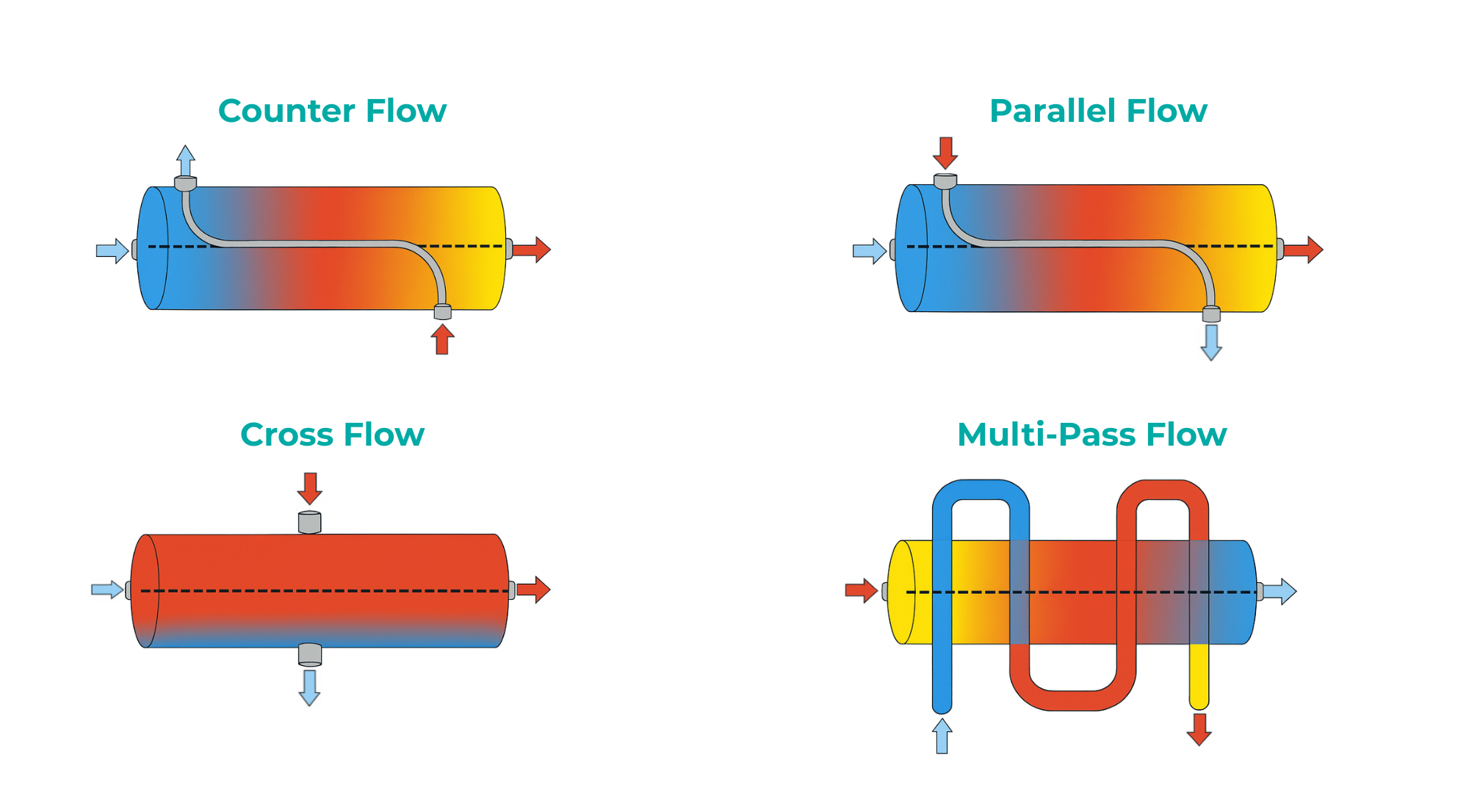
Classification By Flow Configuration

This describes how the two fluids travel inside the exchanger:

  • Counter Flow: In this arrangement, the two fluids move in opposite directions within the exchanger. As they travel, heat is exchanged along the entire length, with the temperature difference spread more evenly between the hot and cold streams.
  • Parallel (Co-Current) Flow: Both fluids enter the exchanger from the same side and move in the same direction. This creates high heat transfer at the entry point, though the temperature difference reduces as the fluids progress through the exchanger.
  • Cross Flow: The fluids travel at right angles to each other. A typical example is an automotive radiator, where coolant flows in one direction through tubes while air passes across them. This layout allows for compact design and effective cooling.
  • Multi-Pass / Hybrid Flow: Some exchangers combine multiple passes or merge counter-flow and cross-flow patterns. This setup increases the length of heat transfer paths and helps achieve a balance between performance, equipment size and pressure drop

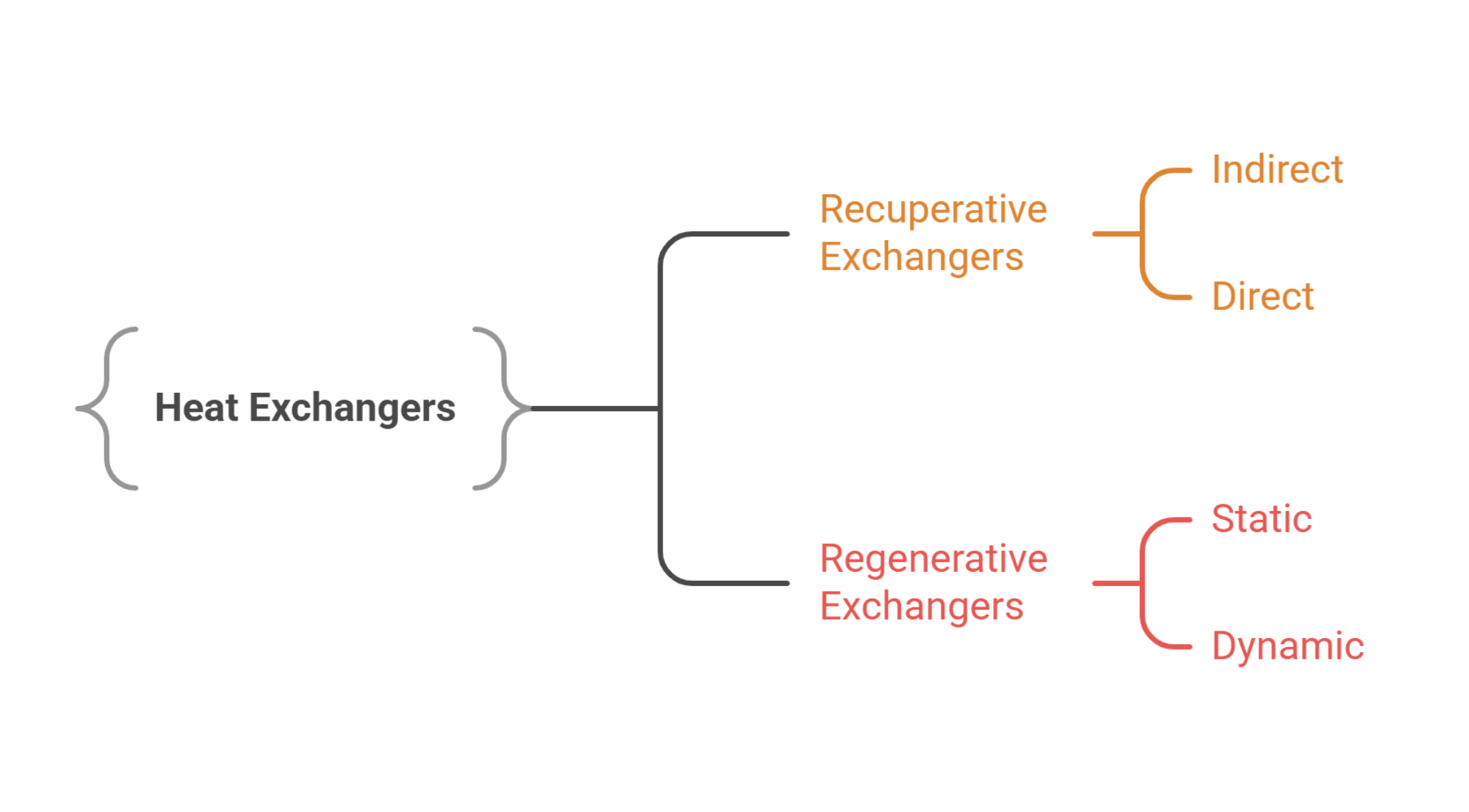
Classification By Construction

heat-exchangers-types-tree-diagram.jpg

This describes the way a heat exchanger is physically built:

  • Recuperative Exchangers: Hot and cold fluids are always separated by a wall (tube, plate or fin). Shell & tube exchangers and plate exchangers fall in this category. They are the most widely used.
  • Regenerative Exchangers: A single surface alternately stores and releases heat first absorbing it from the hot fluid, then giving it to the cold fluid. They are often used in large power plants for energy recovery.
  • Indirect Contact: Fluids never mix, staying on their own sides of a barrier. This is standard in industries where contamination must be avoided, such as food, pharma or aerospace.
  • Direct Contact: Fluids actually touch each other, exchanging heat directly. Cooling towers and spray condensers are good examples. They are cheaper but limited to cases where fluids are immiscible or involve phase change.

TYPES OF HEAT EXCHANGERS

Heat exchangers come in a variety of designs, each tailored to specific operating conditions and industry needs. While their function remains the same transferring heat between two fluids the structure and application vary.

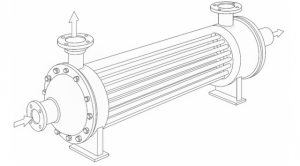
Shell & Tube Heat Exchanger:

Shell & Tube Heat Exchanger

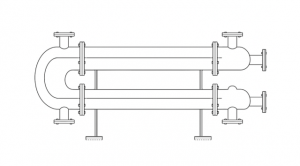
The shell-and-tube heat exchanger is the most widely used type in industries such as oil & gas, power generation and marine engineering. It consists of a cylindrical shell containing a bundle of tubes, with one fluid flowing through the tubes and another around them. These exchangers are highly versatile, capable of handling extreme pressures and temperatures.

How it works: One fluid flow inside the tubes while the other moves around them in the shell. Heat transfers through the tube walls. Baffles inside the shell guide the flow, create turbulence and enhance heat transfer efficiency.

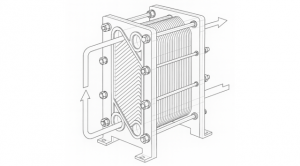
Plate Heat Exchanger:

Plate Heat Exchanger
Compact and efficient, plate heat exchangers use a series of thin, corrugated plates stacked together to create multiple channels for fluids. They are widely used in HVAC systems, food processing and chemical industries where space-saving and easy maintenance are priorities.

How it works: Hot and cold fluids flow through alternating channels separated by plates. The corrugated surfaces increase turbulence, improving heat transfer. Gaskets or brazing keep the fluids sealed while the large plate area ensures rapid energy exchange.

Air-Cooled Heat Exchanger:

Air-Cooled Heat Exchanger
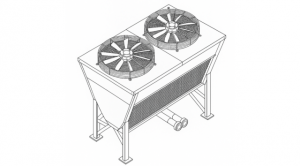
In locations where water is scarce or expensive, air-cooled exchangers are preferred. These systems use ambient air, circulated by fans, to cool fluids flowing through finned tubes. They are common in petrochemical plants, refineries and power stations where large-scale cooling is required without relying on water sources.

How it works: The process fluid flows inside finned tubes. Large fans push or pull air across the fins, which increase surface area and allow more heat to escape into the atmosphere. Depending on the setup, the design can be forced-draft (air pushed upward) or induced-draft (air drawn upward).

Double Pipe Heat Exchanger:

Double Pipe Heat Exchanger
The double pipe heat exchanger is the simplest design, consisting of one pipe inside another. One fluid flow through the inner pipe while the other flows in the annular space between the pipes. While limited in capacity, these exchangers are economical and suitable for small-scale or pilot plant operations.

How it works: Heat moves through the wall of the inner pipe from the hotter fluid to the cooler fluid. The design can be arranged in parallel flow (both fluids move in the same directions), depending on the process requirements.

KEY COMPONENTS OF A HEAT EXCHANGER

A heat exchanger is far more than a simple device for thermal transfer, it is a carefully engineered system where every component plays a vital role. Each part is designed to withstand pressure, temperature changes and constant fluid flow, ensuring that heat moves efficiently between fluids while maintaining safety and long-term durability.

KEY COMPONENTS OF A HEAT EXCHANGER

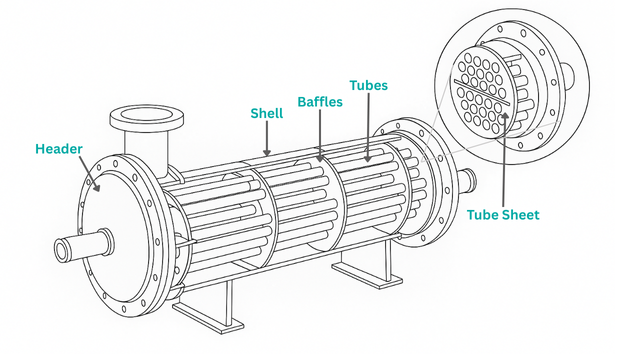
  • Tube Sheet: The tube sheet is a thick, perforated plate that secures the ends of the tubes in exact alignment. It prevents mixing of shell-side and tube-side fluids while providing structural support. Its precision is critical because even the smallest deviation in hole spacing or surface finish can lead to leakage, vibration or premature failure of the exchanger.
  • Shell: The shell forms the outer body of the exchanger and acts as the pressure vessel for the shell-side fluid. It encloses the tube bundle and ensures that fluid flows properly around the tubes. In large-scale applications, shells are designed to withstand extreme operating pressures and temperatures without deformation or leakage.
  • Tubes: Tubes are the primary channels for heat transfer. They carry either the hot or cold fluid and are usually arranged in bundles to maximize surface area. Tube material selection is critical stainless steel, copper alloys, cupro nickel or super alloys are used depending on the environment. Tubes may be straight, U-shaped or finned to meet performance requirements.
  • Baffles: Baffles are internal plates fixed inside the shell to guide fluid flow across the tube bundle. Instead of letting the shell-side fluid move straight through, baffles create turbulence that improves heat transfer efficiency. They also help support the tubes, minimizing vibration and mechanical stress during operation.
  • Headers (or Channel Covers): Located at the ends of the exchanger, headers distribute fluid into the tubes and collect it after heat transfer. They are engineered to manage flow direction, pressure drop and sealing, ensuring the system functions smoothly.

APPLICATIONS OF HEAT EXCHANGERS:

Heat exchangers are not limited to a single sector they are integrated into almost every industry where heating, cooling or energy recovery is required. By ensuring stable temperatures and efficient energy transfer they silently support critical operations worldwide.

  • HVAC Systems: In heating, ventilation and air conditioning (HVAC), heat exchangers form the backbone of systems such as air conditioners, chillers and condensers. They regulate indoor climates across residential, commercial and industrial buildings by transferring heat efficiently between air and refrigerants. With precision engineering these exchangers not only maintain comfort and air quality but also significantly reduce energy consumption making modern HVAC systems more sustainable and cost-effective
  • Power Generation: From cooling massive steam turbines to managing boiler operations, heat exchangers are indispensable in power plants. They ensure stable temperature control, enhance thermal efficiency and protect equipment from overheating under high load conditions. Whether in nuclear, thermal or renewable energy setups, these systems optimize energy transfer while safeguarding plant reliability.
  • Marine Applications: Ships, offshore rigs and marine engines rely heavily on heat exchangers to regulate temperatures in cooling water, lubricants and fuel systems. Operating in harsh sea environments, these exchangers are engineered to withstand corrosion from saline conditions while delivering consistent thermal performance to keep propulsion and auxiliary systems running smoothly.
  • Aerospace & Defense: In aerospace, heat exchangers are precision-built to handle extreme pressure, vibration and fluctuating temperatures. They play a critical role in cooling aircraft engines, avionics and hydraulic systems, where reliability and weight optimization are paramount. Advanced materials and tight tolerance manufacturing ensure maximum efficiency and safety in mission-critical conditions.
  • Process Industries: In chemical, petrochemical and pharmaceutical sectors, heat exchangers enable precise temperature regulation during manufacturing processes. They facilitate reactions, distillations and cooling operations where even minor thermal deviations can impact product quality. Designed for demanding environments, these exchangers deliver performance, durability and process consistency.

WHY SCHILTHORN PRECISION FOR YOUR HEAT EXCHANGER NEEDS?

At Schilthorn Precision Engineering, we bring over 18+ years of proven expertise in manufacturing high-precision heat exchanger components. Our world-class facility, backed by ISO 9001 and AS9100 certifications, ensures that every product meets the toughest international standards and client specifications, from tube sheets & shells tubes to custom assemblies, our components are built to deliver reliability, performance and cost efficiency across industries. Connect with us today to discuss your custom heat exchanger requirements and experience how precision engineering drives better value.

What Are Precision Machine Components?

Have you thought about how machinists make heavy aluminum tools and engine parts? They certainly did not create them with their hands or produce them in a furnace. In fact, they used the process called “Precision Machining”. It is the main element in the creation of hardware that holds up the current developments in technology.

The precision machining has paved the way in the generation of parts and components for several tools used in our daily life. Especially, precision machined components transformed industries like aerospace, automobile, HVAC, and other manufacturing industries. Moreover, the components created with precision machines have high quality and accuracy. In addition, these components can cut materials like aluminum, copper, plastics, and steel with great accuracy and no manual involvement.

What if you require to optimize a mission-critical component? Then, you must know what is precision machining and how it is used to endorse advances in contemporary manufacturing.

Let’s delve into the significant precision machining and its components.

About Precision Machining:

Precision machining is the technical manufacturing used in developing and designing parts, tools, and machines necessary in modern manufacturing. This helps to manage tolerances and process controls that work under strict conditions.

Precision machining uses are there in big and small objects and their components. If there is an object with small parts, generation is through precision machining for proper fitting and great functionality.

Precision Machined Metal Parts:

Precise machined parts generally have complicated features and precise conditions. These parts consist of holes, grooves, threads, and tapers which should fit properly with other components.

Precision machining generates metal parts with precision for the proper functioning of the product. For instance, the components used in automobile engines need precise requirements for optimum performance.

As machinists utilize specific equipment for tolerance, there are fewer chances of error. Moreover, our machine parts manufacturer uses computer numerically controlled machines (CNC machines) to create a broad range of complex metal parts.

The Precision Machining component making Procedure

  • The precision machining procedure usually begins with a sketch using computer-aided design (CAD) software.
  • To execute this, engineers make a 3D diagram of a hand-drawn sketch using AutoCAD software.
  • Then, machinists put that design into CNC machines or computer-aided manufacturing (CAM) programs. However, computers remove the raw material to develop precise parts.
  • Precision machining processes follow the path of accuracy. On the basis of computer software instructions, every cut furnishes through a machine.
  • The machines can do precise cuts with fewer errors. This tends to repeatedly generate hundreds of the alike parts with similar specifications and tolerances of 0.01-0.05mm.

Where Are Precision machine components Used?

Precision machining is an important part of the construction of components.

Following Industries count on precisely machined parts to manufacture products fulfilling safety and quality standards:

1. Aerospace

We function on AS9100 – a universal standard accepted for quality manufacturing and manufacturing procedures. On top of that, our team works with exceptional metal to general environmental-friendly solutions.

 2. Heating, Ventilation, and Air Conditioning (HVAC)

We manufacture and deliver many components and assemblies to the best OEM manufacturers in the world. Our motto is to stay abreast with the modern equipment and engineering resources to generate the best-quality components.

3. Automobile

We own a reliable system to manufacture components for the automobile industry. Our products made from advanced quality raw materials are in accordance with the standards of the industry. Also, our modern machinery suits well with automotive customers.

4. CPVC Fittings(Chlorinated Polyvinyl Chloride)

Schilthorn provides great innovation in Brass CPVC fittings for the irrigation, plumbing, and sewerage industries. Our latest infrastructure covers advanced tools and machinery for quantitative and qualitative production.

5. Fittings and Fasteners

We are foremost manufacturers and exporters of different Brass inserts in several lengths and breadths. Customers prefer our products due to their great performance and high tensile strength. However, the inserts are accessible in a variety of sizes, connections, finishes, and diameters.

6. Oil and Gas

We comprehend the significance of precision machining as equipment must sync with the quality and safety standards. Other than that, we deal with many materials such as Titanium, Non-Ferrous Material, Aluminum, Alloy steel, and Engineering plastics. Our first-class manufacturing parts and supply of service from initial formation to final delivery is paramount.

Where else is precision machining used?

  • Precision machining is efficiently used to design parts, tools, custom fasteners, and other important hardware. Thus, the parts should have a higher tolerance for an accurate fit with other components.
  • The interesting fact is that precision machining maintains reliability for mass-production components. This is particularly seen in producing fittings. Precision machine parts manufacturers make sure for constant and reproducible outcomes.
  • Furthermore, precision machining is perceivable in the completion of metal products. For instance, you can use precision machining via die casting or less precise fabrication techniques to finish produced parts. On the contrary, precision machining has its uses in Restoration work.
  • Also, worn parts might require grooving, welding, or calibration within a period, Therefore, computer-aided equipment will restore the parts to their original state.

Why select Precision machine components for your Project?

There are many reasons for choosing precision machining as it is the best process in international manufacturing.

Let’s head over with the advantages of precision machining:

1. Highest accuracy level

The infinitesimal millimeter can create an impact in global manufacturing specifically in the medical electronics industry. Due to this reason, precision machining is at the utmost priority in the industry. Every manufacturer requires precise specifications and drawing and the preparation of CNC machines conducts accurate cuttings.

2. Less raw material wastage

Although precision machining has subtractive manufacturing, which generates more material waste than additive manufacturing, it lowers the error rate and builds quality. This reduces the wastage of bad-quality products, or repetitive procedures and utilizes more material.

Moreover, the precision machined components succeeded in bringing down raw material wastage as the cut components bring great accuracy. We are aware that raw materials like graphite, copper, steel, and plastics are expensive, and any waste is not highly acceptable.

3. Quick Assembly

The precision machines set up the components automatically and there is no manual interruption for assembly. As the process is fast and automatic, the production time is drastically reduced.

4. Cost-efficient

With fewer errors and generating supreme outputs, precision machining can extremely reduce the manufacturing cost. It enables manufacturers to have a proper financial plan for production and decreases labor expenditures.

5. Safe production

Accidents are the most common thing in manufacturing. As per the US Labor of Statistics, there were 303 critical work injuries in the manufacturing industry. Machinery accidents are distressing, but thanks to the automated procedure of precision machining reduce their occurrence.

6. Effectual and fast production

Since the computers control precision machined parts and have every detail of production programs, they are effective and speedy in generating the outcomes.

7. No manual involvement

With the usage of precision machined components, there is no tendency for human blunders, which leads to resourceful results.

8. Functional prototype manufacturing

The most crucial benefit of machining is that it can generate prototypes similar to end-use components. This means that CNC machining allows the customer to prototype their product using the end-use material. Further, it endures testing for the quality and feasibility of the design.

Through Prototype machining, engineers and designers can fix the issues. Along with that, they can showcase to the customers the functionality of the final product.

9. Zero errors

The automated precision machining procedure begins after the specifications are known. There are nil errors compared to human machining. During outsourcing, you need not recruit and hire skilled staff to operate these machines.

Which components does Schildthorn hold expertise in?

1. Milling Components

We provide you with high-performance vertical and horizontal milling centers for your machined parts using cost-efficient methods. From super duplex, and titanium, to Aluminium and stainless steel, we cover all the materials. Additionally, our machines fitted with WIPS probing and laser tool breakage detection assure quality.

2. Turning Components

Schilthorn supplies Turning components for consistent performance which has high thread integrity, tight tolerance, and burr-free edges for a fine finish. Our precision engineering facilities blend CNC Turning and turn-mill to generate simple and complex components for diverse sectors.

3. SPM Components

To enhance the quality of the product and deliver first-rate components in bulk, we created a series of Special Purpose Machines. We generate customized machines that are suitable for the process of turning, milling, and threading.

How we help you with precision machined components?

Schilthorn manufactures precision machined components with great accuracy and ideal dimensions for important sectors. Our modern machinery, materials, and equipment fulfill the current standards of the industry.

On the other hand, our precision machining components and manufacturing ranges from prototyping to production capability. We not only deliver precision engineering parts but also innovative methods for your business optimization:

Our top-notch quality machines that fit your specifications are as follows:

  • Lathe Machine
  • Automatic Lathe THU
  • Surface Grinder
  • Bench Grinder
  • Hacksaw Machine
  • Cutting machine
  • Drilling machine
  • SPM Automates
  • Slotting Machine
  • Thread Rolling Machine
  • Forging Press
  • Polishing Machine
  • Engraving Machine
  • HAAS make Horizontal Milling Centres
  • HAAS make Vertical Milling Centres
  • HAAS make CNC 2 axis Turning Centres
  • TurnMills

What are our other manufacturing capabilities?

1. Forging

Our forging facilities comprise completely automated forging press lines that vary from 1600T to 16000T. The billet cutting equipment like shearing machines, saw cutting machines, high-speed shearing machines, and circular saw machines support the forging lines. The main features of this capability are high toughness, custom part flexibility, and excellent surface finish.

2. Surface Treatment

With our superior technologies, surface treatment is highly achievable in manufacturing and assembly, pre-treatment before electroplating, anodizing, galvanizing, painting, and powder coating. Not only that but also it helps in the removal of surface coating and deposits before reprocessing. The best features of this capability are it enhances corrosion resistance, gives a better surface finish, and wear and tear resistance.

3. Welding and Fabrication

Our best team of technicians works with your team to get a clear-cut idea for the welding and fabrication of every component. Moreover, welders and inspectors examine every stage of a project to match your requirement with precision. The top features of this capability are that there are many welding and fabrication options, specialized NDT testing done, and precisely engineered products.

Apart from that, we engage in acquiring raw materials, processing, surface treatments testing of units, quality assurance, and delivery of products.

With us, you can stay assured of precision machining as we consider factors like operational control processes, extensive inspection devices, best-quality control systems, and quality checkpoints to increase efficiency.

4. Final Takeaway

Since the initiation of the industrial revolution, precision machining has molded in many ways and will be more precise with time. Computers automatically remove the material to generate precise parts. The machine completes every cut based on the instructions from the computer software.

Using precision machined components, you can avail fast, efficient, safe production with less raw material wastage!

Schilthorn has made its place as the best precision machined components manufacturer in India serving customers in numerous industries. Our production capacity and in-house capabilities such as designing, prototyping, CAD/CAM programming, and tooling are properly done.

Precision machine components, Core values, Precision machining process

Things to Keep in Mind while selecting a machine component manufacturer

Oftentimes finding the right precision machined component supplier is a tedious task. Finding a precision machined component supplier who is a good fit for your product and its market position should be the focus of your search.

Manufacturing techniques, capacity, standards, turnaround time, and pricing must all meet your requirements. Prior to placing an order, it’s also crucial to consider compatibility with the manufacturer.

It is important to choose a machine parts manufacturer wisely. An ideal manufacturer can bring enormous spark to your business. In terms of work performance and team spirit.

While choosing a machine parts manufacturer one should keep following things in mind:

Has a company been in the precision machining sector for a long time?

The more precision machining experiences a manufacturer has, the more professional they become. If a company has been in the precision machining industry for more than ten years, it should be well-versed in the field. The manufacturer is capable of dealing with complicated parts and difficult-to-process materials. As a result, choosing a precision machining company with over 10 years of experience is preferable because they have solutions for the industry’s challenges.

What kind of machinery is available at the factory?

As a professional machining supplier, the firm should have the major precision machines such as:

  • SPM automates
  • Thread rolling machine
  • Horizontal milling centre
  • CNC Turning Centre
  • Vertical milling centre
  • Forging press
  • Turn mills
  • Lathe machine
  • Automatic lathe THU

These machines are capable of performing the majority of machining operations. The more advanced the machine, the better the machining capability.

Are they willing to take up complex situations?

Being competent is fantastic, but preparedness for a major challenge demonstrates that the manufacturer is committed to building long-term, high-volume connections. As a result, this is a culture fit, with machinists whose ideas and ambitions are similar to yours. Suppliers like this are better suited to handle your long-term demands. They’re also more inclined to collaborate and put your needs first.

How is the factory’s quality control for machining?

The importance of quality cannot be overstated. Before placing an order, find out how the factory handles machining quality control. Examine whether the factory has modern measurement and testing equipment. Some of them are CMM (Coordinate Measuring Machine), projector, callipers, micro callipers, calliper gauge, pin gauge, pass metre, and so on. A qualified CNC machining manufacturer should inspect every procedure. And should offer material and testing data for you, from raw material selection to shipment.

Is the machining plant capable of excellent design?

With the part being made in accordance with the design, precision machining necessitates numerous designs. It will help you improve your machining design if the machining production facility has design capacity. The manufacturer can quickly assess the part’s machinability. They can then advise you on how to improve it to meet your needs. They might even provide design services after assessing your drawings. Better machinists use SolidWorks, UG, and AutoCAD. They are well-versed in the restrictions and requirements of both design and machining.It’s also crucial that the manufacturer has processes in place to help them achieve maximum manufacturing efficiency and provide the precision products they need.

Does the quote appear to be competitive?

When it comes to finding a machining company, the most critical concerns are pricing and lead time. The more competitive the quotation becomes, the lower the price and the shorter the lead-time are. In order to make a proper profit, a reputable machining manufacturer always lets the customer have the greatest profit. By increasing manufacturing methods and efficiency, the firm will concentrate on machining technology to provide a competitive pricing and high quality. Selecting this type of precision machine component manufacturer will provide you with good quality, a quick turnaround time, and a competitive pricing.

To Sum Up:

Precision machining is an OEM service that demands a significant couture. You will save time and money if you work with good precision machined components manufacturers in India.

At Schilthorn, we keep ourselves abreast of the industries we work for to not just deliver precision but also innovation that optimises their businesses. The efforts we make are driven towards finding methods to enhance productivity and output for providing excellence uninterruptedly. From understanding your requirements to delivering perfect solutions and everything in between, we leave no stone unturned to cater for the quality that reinforces your performance industriously.

A Glorious Journey of 15 Years in Machine Component Manufacturing

The beginning of our story

It was the year 1995 when Mr Shardul Patel completed his B.E Mechanical from Gujarat University and flew to the UK for M.S Mechatronics. While pursuing M.S, he started his professional career as a researcher assistant. As an engineer, he worked with multiple companies till the 2000s. Being a mechanical researcher and learner he closely observed the machine components and their requirements in the market for years. He found out that in spite of having such a huge demand the service providers are fewer. In order to fulfil this gap, Mr Patel’s new journey began.

When you obtain knowledge and experience, you always look forward to applying it to fundamental skills. Identifying the loophole in the market is always considered to be the idea of creation & innovation. With this in mind, Schilthorn was formed. The purpose was to fulfil the demand for manufacturing and engineering services.

Before starting Schilthorn, we had similar concerns as any other person whether the tough marketing conditions in the 21st century will be harder for business survival. However, the fierce business competition has never put us in discomfort, it has rather helped us in delivering precision.

This question is often posed to a lot of entrepreneurs, sportspersons and celebrities And have we’ve all seen faces lit up with pride and happiness when somebody tells their success story. We feel the same emotions when we look back at our 15 year long, magnificent journey. But it’s not just one person who made this possible. Without the trust of our co-founders, employees and clients, it would have been near impossible to sustain and grow. And as a result of our passion for precision and our insistence on upholding our values, our ambition to become one of the best manufacturing and engineering service provider is now taking a new turn.

Values that we swear by

Our founder believed that a company’s values define its identity. That’s why all our employees take pride in working towards a common goal. From top-level management to new joinees, everyone reinforces the company’s core values. They guide our day-to-day decisions as well as shape who we are in the long run.

  • Innovative Leadership – We encourage innovative leadership. Our leaders are always engaging and promoting employees to sharpen their skills. An increase in productivity, implementation of innovative ideas and critical thinking scales up Scilthorn’s objectives.
  • Environmental Consciousness – Being a service provider of machines, it is very much important to think green. We foster an eco-friendly and healthy environment. From placing plants within the workplace to being a part of any green campaign activities.
  • Cost-Effectiveness and Quality Assurance – We unflinchingly stand by our promise to deliver the best material at the best cost. We never compromise our service and quality because meeting and exceeding our customer’s expectations is very important to us.
  • Team Synergy – We believe that the chemistry of teamwork collectively shapes the success of Schilthron. We share a common interest and maintain healthy relationships, common values, and honesty at our workplace.

Over the years, these values combined with our principles have shone a guiding light for us to shape our future, along the footsteps of our esteemed founder.

Ethical principles that set us apart

In the Indian industry, the engineering sector has a large hold. And an industry like engineering requires the exact amount of perfection it needs. That why, just like machines, our adherence to our principles is precise and reliable. Because we believe that when it comes to machines that contribute to productivity, there is no scope for compromising on principles. Giving a chance to compromise can never justify the objective of the machines and their engineering.

  • Offering precision and innovation that optimizes businesses.
  • Understand business requirements and give perfect solutions.
  • Enhance productivity by providing excellence, uninterruptedly.
  • Last but not the least, we cater to the quality that strengthens your performance thoroughly.

Our team of trained professionals deliver sheer accuracy in manufacturing machines and their components at all times, as a result of these.

Speardeading innovation in the industry

Committing to our principles and keeping up our values does not mean that we are not open to change. At Schilthron, we believe in doing whatever it takes to ensure that our clients grow. That’s why we inculcate innovation, adaptation and optimisation of all our offerings with every project we undertake. A few encapsulations of our projects in-depth and understanding when taking on a new role –

  • The Challenge – Our client’s requirement was products developed from special grade aluminium and no compromise on quality. The parts were required for application in space, precise tolerance and adherence to complex domestic features and dimensions were a must.
    • Our process – Firstly, we planned the manufacturing process, including multi-axis machining and the use of a turn-mill.
    • We prepared the failure modes and effects analysis (FMEA) of the process and control plan to make a first-time-right product.
    • Then, we developed jigs and fixtures to manufacture various complex geometric features.
    • We also conducted trials on prototypes to make sure that specific features and the tolerance adhered to the requirements.
    • In a nutshell, we produced 72 horns for inflight use, which were thoughtfully manufactured for space application.
  • The Challenge – Due to concerns regarding proper quality and regular supply, our UK-based client wanted to switch from their previous supplier based in China & wanted a domestic supplier who could provide them with quality products at value pricing.
    • Our process – We started by properly defining the manufacturing process and the control plan to produce precision machined electrodes from bronze rods.
    • Next, we prepared a special purpose jig for the application on non-conductive coating.
    • Moreover, we used a UV based coating material to inspect the coating under UV light.
    • Finally, the electrode was verified for end application by the OEM.
    • In a nutshell, 3 million electrodes were supplied to different parts of the world, including China.

Due to our continuous efforts to improve the quality of the machining and coating process, we have been the sole supplier for some of our clients for more than 10 years.

Capabilities that make precision available

In order to offer our esteemed clients the best possible service, we work constantly work to develop a wide range of capabilities.

Manufacturing Processes – Our manufacturing processes include precision machining, forging, surface treatment, welding and fabrication

  • Machines – A list of equipment that assists us to achieve our promise of perfection are Automatic Lathe THU, SPM Automates, Thread Rolling machine, Polishing machine, HASS make Vertical Milling Centers, HASS make Horizontal Milling Centers, Forging presses, Turmils, Lathe machines, Drilling machines, Slotting machines, and many more.
  • Measurement capabilities – With the latest advancement in hardware, we can measure small and large parts with accuracy.
  • CAD-CAM Capabilities – Schilthorn’s advanced CAD/CAM capabilities enable us to manufacture custom prototypes and parts based on all industry-standard 3D renderings.
  • Shipping and Export – We consistently meet our customer’s deadlines and are fully equipped to meet any specific packaging requirements. Be it a domestic or international shipment, our experienced staff and all our resources get your cargo safely to the destination.

Materials we work with – Schilthorn knows how important it is to select the right kind of machine for processing materials. As a result of our vast experience and expertise, we can machine exotic materials as well as materials that are commonplace in the industries we serve.

Tolerance we work with – Every project that we enter, at our state-of-art facility, has precision and accuracy as the primary characteristics. Our quality has made our name a touchstone that is referred to specifically in high precision machining for HVAC, Space, Automobile and Aerospace parts.

Sectors we enrich

For the versatile needs of different sectors, Schilthorn Precision Engineering manufacturers a comprehensive range of high precision components. Our client’s trust makes it possible for us to expand our collection of abilities and skills. We leverage our precision machinery team’s skills to the highest potential in order to help our clients in meeting their goals. For each specific sector, we have different manufacturing and engineering solutions. The sectors that we serve are –

  • Space & Aerospace
  • HVAC
  • Automobile
  • CPVC Fittings
  • Fittings & Fasteners
  • Oil & Gas

The quality promise by Schilthorn

Our state-of-art precision machining equipment, operational processes, comprehensive inspection devices, built-in quality checkpoints and no-compromise quality control systems assist us to improve our quality standards at low costs, maximising our manufacturing efficiency and solutions. And leave no stone unturned when it comes to quality assurance.

Looking forward

The ideation and its implementation to begin Schilthron are to maintain integrity as per market standards. As a machine component manufacturer, we understand the various needs of the consumers. We have a set of objectives beyond and best for the company as well as for the clients. Our mission is clearly defined to deliver precision and innovation. The importance of the quality of components cannot be overstated enough, hence, no compromise.