
Rubber-Metal Moulding Supplier India: What to Validate Before Awarding Business
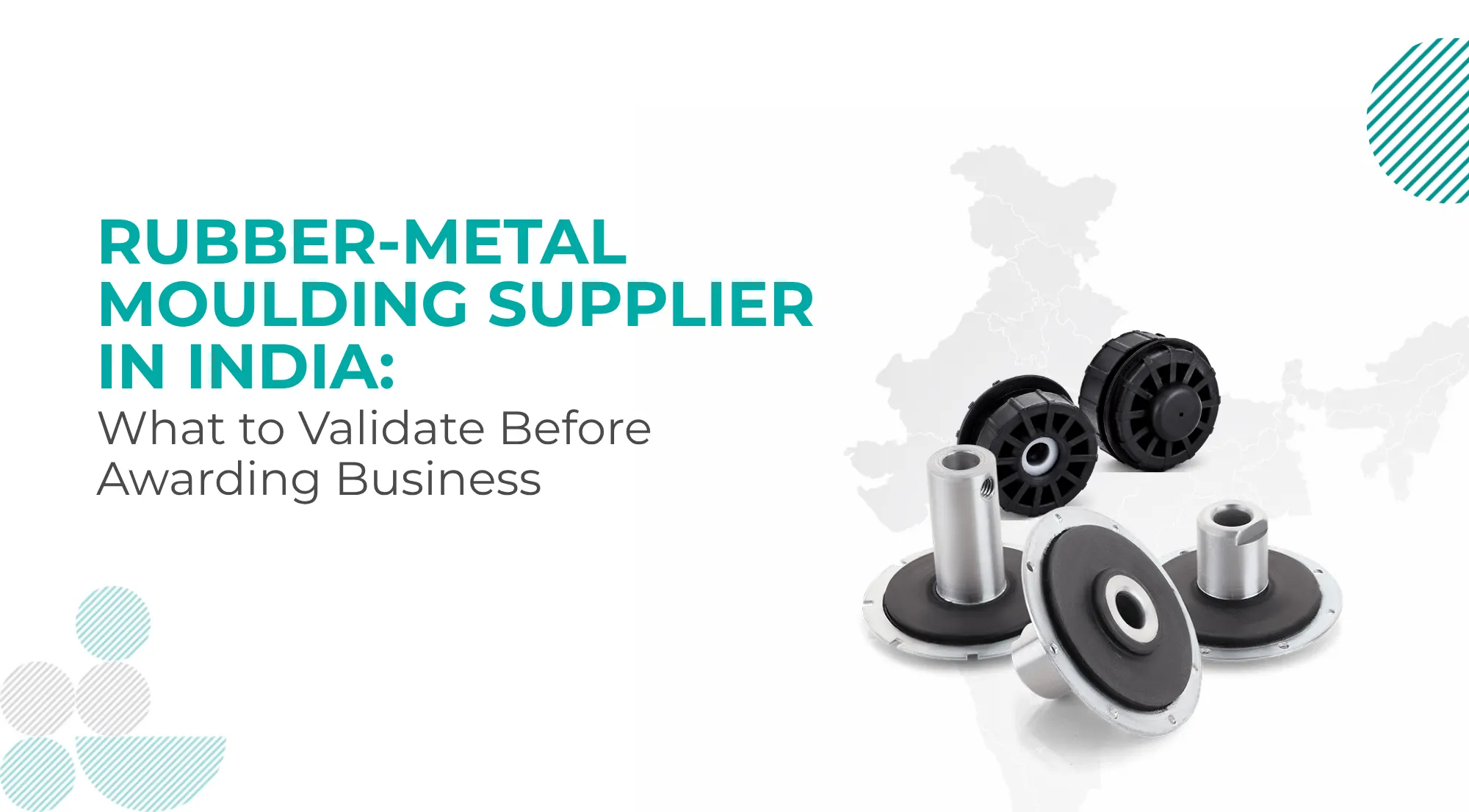


The global rubber-to-metal bonded components market was valued at USD 1.37 billion in 2024 and is growing at a CAGR of 6.1% a clear signal that demand for these components is not slowing down. Yet a single bonding defect is all it takes to trigger premature failure, production stoppages and expensive warranty claims.
For procurement teams and OEMs sourcing from India, choosing the right rubber to metal moulding supplier is a strategic decision not just a price comparison. India’s manufacturing ecosystem is deep, but capability varies sharply. Some suppliers handle only rubber moulding; others integrate precision CNC machining, metal insert manufacturing, custom tooling and rubber bonding under one roof.
This guide walks you through the key validation points from manufacturing capability and process consistency to quality certifications, engineering support and delivery reliability so you can evaluate suppliers beyond price and make procurement decisions that hold up in the field.
What Is Rubber-to-Metal Moulding?
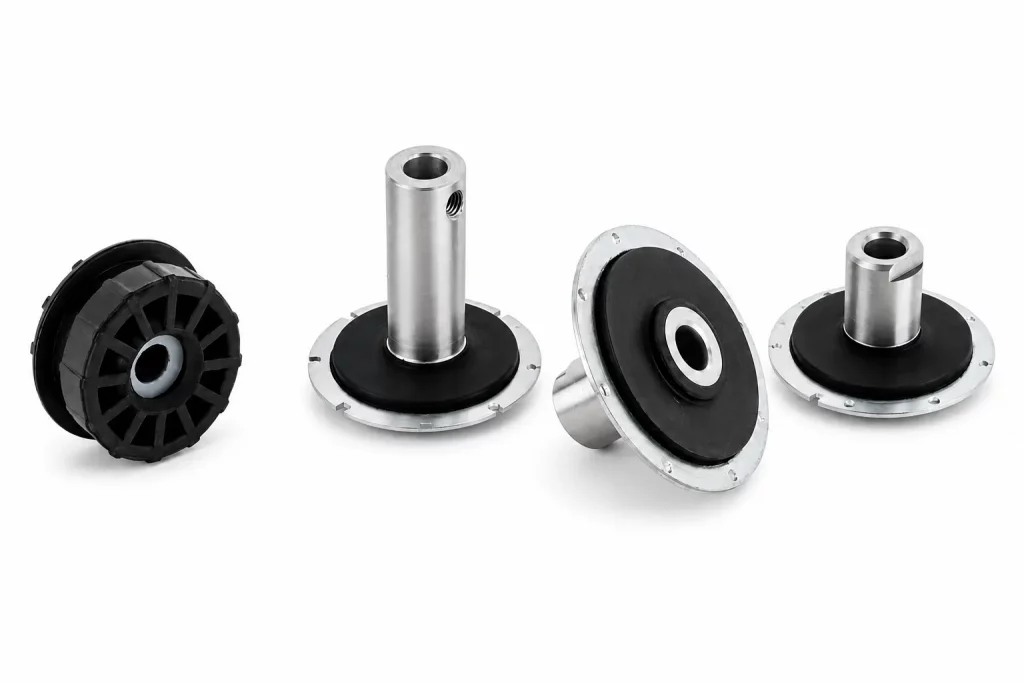
Rubber-to-metal moulding is a manufacturing process in which rubber is permanently bonded to a metal component to create a single integrated part. Instead of assembling rubber and metal separately using adhesives after production, both materials are chemically bonded during the moulding process to achieve superior strength, durability and long-term performance.
The process combines the flexibility, sealing capability and vibration absorption of rubber with the structural strength and dimensional stability of metal. This makes rubber-metal bonded components ideal for demanding applications where mechanical loads, vibration, pressure, temperature variations and continuous movement are involved.
The metal insert commonly made from stainless steel, mild steel, brass or aluminium is first precision machined and carefully prepared. After cleaning and surface treatment, a specialised bonding agent is applied to promote strong adhesion between the rubber and the metal. The prepared insert is then placed inside a mould where the selected rubber compound is moulded and cured under controlled temperature and pressure.
Once curing is complete, the rubber becomes permanently bonded to the metal insert, producing a single component with excellent mechanical strength and resistance to separation.
Common Rubber Moulding Processes
Depending on component geometry, production volume and material requirements, manufacturers may use different moulding methods.
Compression Moulding
Compression molding is one of the most widely used processes for manufacturing rubber-metal bonded components. A measured quantity of rubber compound is placed inside the mould cavity along with the prepared metal insert. Heat and pressure are applied until the rubber flows throughout the cavity and cures into its final shape.
This method is well suited for medium- to large-sized components, lower production volumes and applications requiring robust bonding performance.
Transfer Moulding
Transfer molding is commonly selected for components with intricate designs or embedded metal inserts. In this process, the rubber is first placed into a transfer chamber before being forced into the mould cavity under pressure.
The process provides improved material flow and allows manufacturers to produce more complex geometries with greater consistency.
Injection Moulding
For high-volume production and precision-engineered components, many manufacturers use custom rubber injection molding. Here, the rubber compound is heated and injected into the mould under controlled pressure, resulting in shorter production cycles, improved dimensional consistency and reduced material waste.
Injection moulding is particularly suitable for OEM applications where tight tolerances and repeatability are essential.
Where Are Rubber-to-Metal Bonded Components Used?
Rubber-metal bonded components are used across a wide range of industries because they combine structural strength with vibration isolation, sealing and impact absorption.
Some of the most common applications include:
- Automotive engine mounts and suspension components
- HVAC equipment and compressor assemblies
- Industrial machinery and heavy engineering equipment
- Pumps, valves and fluid handling systems
- Electrical and electronic equipment
- Construction and mining machinery
- Railways and transportation systems
- Agricultural equipment
- Medical and industrial devices requiring vibration control
Many of these applications demand components that can withstand continuous mechanical stress, harsh operating environments and long service life. As a result, manufacturers increasingly rely on custom rubber moulding solutions designed specifically for their product requirements instead of standard off-the-shelf components.
Why Supplier Selection Matters More Than Part Price
When sourcing rubber-metal bonded components, the lowest quotation is not always the lowest overall cost. Procurement decisions based solely on unit price often overlook the long-term impact of quality, reliability and manufacturing consistency. A component that costs slightly less today can lead to expensive production interruptions, warranty claims and repeated replacement costs if it fails in service.
Rubber-to-metal bonded parts are frequently used in critical applications where vibration isolation, sealing performance or structural support is essential. A weak bond between the rubber and metal, incorrect material selection or inconsistent manufacturing process can compromise the performance of the entire assembly.
For OEMs, these issues extend beyond component replacement. Production delays, customer complaints, emergency sourcing, product recalls and reputational damage can all result from selecting an unsuitable supplier.
This is why experienced procurement teams evaluate suppliers based on their manufacturing capability, quality systems, engineering expertise and long-term reliability not simply on pricing. The objective is to reduce lifecycle costs while ensuring consistent product performance throughout the supply chain.
Things to Validate Before Awarding Business to a Rubber-to-Metal Moulding Supplier
Choosing the right rubber-metal bonding supplier in India involves much more than comparing prices or production capacity. A dependable manufacturing partner should combine technical expertise, precision manufacturing, quality assurance and the ability to support your business as product requirements evolve.
Before finalising your supplier, evaluate the following key areas.
-
Experience with Similar Components and Industries
Every rubber-metal bonded component is designed for a specific application and manufacturing requirements can vary significantly across industries. A supplier producing standard industrial rubber parts may not have the expertise needed for precision applications in automotive, HVAC, electrical equipment or heavy engineering.
Ask potential suppliers:
- Have they manufactured similar components before?
- Which industries do they currently serve?
- Can they share examples of comparable projects?
- Do they understand your application’s functional and performance requirements?
Industry-specific experience enables suppliers to recommend better materials, identify potential manufacturing challenges early and deliver more reliable components.
-
Expertise in Rubber-to-Metal Bonding
The long-term performance of a rubber-metal component depends largely on the quality of the bond between the rubber and the metal insert. Achieving a durable bond requires controlled manufacturing processes and technical expertise.
An experienced rubber metal bonded parts manufacturer India should have well-defined procedures for:
- Surface preparation of metal inserts
- Adhesive or bonding agent selection
- Controlled molding and curing
- Process validation
- Bond strength verification
Even minor inconsistencies in surface preparation or curing conditions can weaken the bond and reduce component life. Understanding how a supplier controls these critical stages provides valuable insight into their manufacturing capability.
-
Material Selection and Engineering Support
Selecting the right combination of rubber and metal is essential for ensuring long-term performance. Factors such as temperature, pressure, vibration, chemical exposure and operating environment all influence material selection.
Rather than simply manufacturing according to drawings, a capable supplier should provide engineering recommendations based on your application requirements.
Common rubber compounds include:
- Natural Rubber (NR)
- Nitrile Rubber (NBR)
- EPDM
- Silicone
- Neoprene
Depending on the application, metal inserts may be manufactured from stainless steel, mild steel, brass or aluminium.
Suppliers with strong engineering capabilities can also recommend design improvements that simplify manufacturing while enhancing product performance and service life.
-
In-House Tooling, Precision Machining and Manufacturing Capability
A supplier’s manufacturing capability extends beyond rubber moulding alone. The ability to manage tooling, precision machining and moulding operations under one roof provides greater control over quality, lead times and production consistency.
When evaluating rubber mould manufacturers, look for capabilities such as:
- In-house mould and tooling development
- CNC machining of precision metal inserts
- Compression, transfer and injection moulding
- Modern rubber moulding press systems
- Controlled curing and process monitoring
- Capacity to support prototype and production tooling
Managing these processes internally reduces dependence on external vendors, shortens development cycles and helps maintain consistent product quality from prototype through large-scale production.
-
Quality Inspection, Testing and Certifications
Reliable manufacturers don’t rely solely on visual inspection. They implement structured quality systems and perform regular testing to ensure every component meets customer specifications.
A supplier should have documented quality procedures supported by recognised certifications such as ISO 9001.
Areas to evaluate include:
- Bond strength testing
- Hardness testing
- Dimensional inspection
- Tensile and peel testing
- Compression set testing
- Batch traceability
- Material certifications
- Standard operating procedures (SOPs)
- PPAP and First Article Inspection (FAI), where applicable
Strong quality systems reduce process variation, improve consistency and minimise the risk of product failures after delivery.
-
Prototype Development and Engineering Collaboration
Most OEM projects begin with prototypes or pilot batches before moving into mass production. Working with a supplier that supports this development phase allows potential issues to be identified and resolved early.
Ask whether the supplier can provide:
- Prototype manufacturing
- Pilot production
- Tool modifications
- Design validation
- Engineering collaboration
- Small-volume production
Early engineering involvement helps optimise product design, improve manufacturability and reduce the risk of costly changes later in the project.
-
Production Capacity, Scalability and Delivery Performance
Your supplier should not only meet today’s production requirements but also support future business growth. Production capacity, planning systems and delivery performance all play a critical role in maintaining a reliable supply chain.
Before awarding business, evaluate:
- Monthly production capacity
- Ability to scale production
- Lead times for prototypes and production orders
- Production planning systems
- Inventory management
- On-time delivery performance
- Export packaging and logistics support
A supplier with scalable manufacturing operations and dependable delivery processes can help minimise production disruptions and support long-term supply continuity.
-
Commitment to Long-Term Partnership
The best manufacturing relationships extend beyond supplying parts. A reliable supplier acts as a technical partner, supporting continuous improvement throughout the product lifecycle.
Look for a supplier that offers:
- Design for Manufacturability (DFM) support
- Material optimisation recommendations
- Cost reduction opportunities
- Fast technical communication
- Assistance with product improvements
- Ongoing engineering support
Choosing a supplier committed to collaboration helps improve product quality, reduce manufacturing costs and build a stronger, more resilient supply chain over the long term.
Rubber-to-Metal Moulding Supplier Validation Checklist
| Validation Point | Why It Matters |
|---|---|
| Industry Experience | Ensures application-specific expertise |
| Bonding Process | Delivers durable rubber-metal adhesion |
| Material Expertise | Matches materials to operating conditions |
| Tooling & CNC Capability | Improves precision and consistency |
| Quality Systems | Reduces defects and ensures traceability |
| Prototype Support | Validates design before production |
| Production Capacity | Supports future business growth |
| Engineering Partnership | Enables continuous product improvement |
Why Choose Schilthorn as Your Rubber-to-Metal Moulding Supplier?
Schilthorn Precision Engineering combines over 18+ years of precision manufacturing expertise with controlled rubber-to-metal bonding processes to deliver high-performance bonded components for demanding industrial and OEM applications. Our manufacturing approach integrates precision machining, process-controlled molding and rigorous quality inspection to ensure consistent product performance across every production batch.
Our capabilities include:
- Precision CNC machining of metal inserts with tight dimensional tolerances
- Rubber-to-metal bonding using validated adhesive systems and controlled vulcanization processes
- Compression and transfer molding for a wide range of industrial applications
- Surface preparation and conditioning to achieve reliable bond strength
- Manufacturing of custom rubber-metal bonded components from customer drawings or specifications
- CMM-based dimensional inspection and comprehensive quality verification
- Prototype development, pilot batches and scalable production for OEM requirements
- ISO 9001 and AS9100 certified quality management systems supporting consistent manufacturing processes
From precision-machined inserts to finished bonded assemblies, every stage of production is managed under controlled manufacturing conditions to achieve dimensional accuracy, reliable adhesion and repeatable quality.
Looking for a reliable rubber to metal moulding supplier in India?
At Schilthorn, our engineering team works with you from concept to production reviewing drawings, recommending the right material combinations and optimising designs for manufacturability, performance and cost efficiency.
Share your drawings or technical specifications to discuss a reliable, production-ready rubber-to-metal moulding solution tailored to your application.
Frequently Asked Questions (FAQs)
1. How do I choose the best rubber-to-metal moulding supplier in India?
Look beyond pricing and evaluate the supplier’s experience, rubber-to-metal bonding expertise, precision machining capabilities, quality management system, inspection processes, engineering support, prototype capability and delivery performance. A reliable supplier should be able to demonstrate consistent manufacturing quality and support your production requirements over the long term.
2. What certifications should a rubber-metal bonded parts manufacturer have?
At a minimum, look for an ISO 9001-certified quality management system. Depending on your industry, additional documentation such as material traceability, inspection reports, First Article Inspection (FAI) and PPAP documentation may also be required.
3. What industries commonly use rubber-to-metal bonded components?
Rubber-metal bonded parts are widely used across automotive, HVAC, industrial machinery, pumps, valves, electrical equipment, railways, construction equipment, agricultural machinery and heavy engineering applications where vibration control, sealing or structural support is required.
4. What are the most common causes of rubber-to-metal bonding failure?
Bond failures are typically caused by inadequate surface preparation, incorrect adhesive selection, poor curing conditions, incompatible materials, contamination during manufacturing, design limitations or insufficient quality control.
5. Can manufacturers produce custom rubber-to-metal parts from customer drawings?
Yes. Most experienced manufacturers can produce custom rubber metal parts based on engineering drawings, CAD files or physical samples. They may also recommend design modifications, suitable rubber compounds and tooling improvements to enhance product performance and manufacturability.
6. What quality tests should rubber-metal bonded components undergo?
Depending on the application, manufacturers may perform bond strength testing, hardness testing, tensile testing, peel testing, compression set testing, dimensional inspection and visual inspection to ensure the finished component meets quality and performance requirements.
7. Why is in-house CNC machining important for rubber-to-metal moulding?
In-house CNC machining ensures precise metal inserts, better dimensional control, improved bonding consistency and faster product development. It also reduces dependency on external vendors, resulting in shorter lead times and stronger quality control.
8. Can the same supplier support prototypes and large-scale production?
Yes. An experienced OEM rubber moulding supplier India should be able to support the entire product lifecycle from prototype development and pilot batches to full-scale production while maintaining consistent quality, documentation and delivery performance.