
Aerospace CNC Machining: The Complete Guide for High-Precision Aerospace Machining
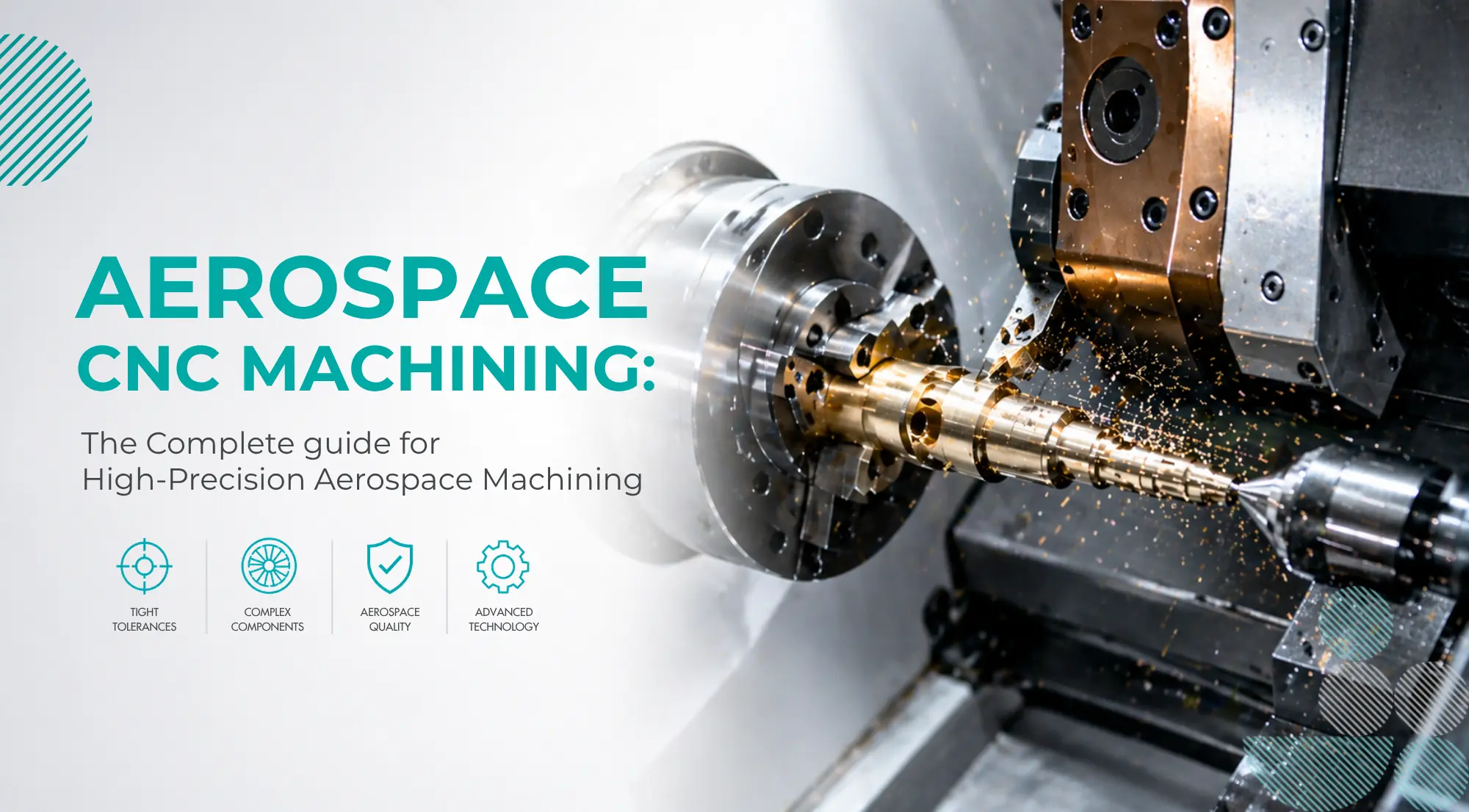


The aerospace industry operates in one of the most demanding environments known to engineering. Aircraft, spacecraft, satellites, and defence systems that must perform flawlessly under extreme temperatures, intense vibration, and relentless mechanical stress, on which human lives often depend on every single component. In this context, precision is not a luxury. It is a non-negotiable requirement.
Aerospace CNC machining has emerged as the backbone of modern aerospace manufacturing, enabling engineers and manufacturers to produce components that meet tolerances measured in microns, maintain structural integrity under extraordinary conditions, and comply with some of the most stringent quality standards in any industry. From turbine blades and engine mounts to landing gear components and structural airframe parts, CNC machining sits at the heart of how the aerospace world builds its most critical hardware.
This guide walks through everything you need to know about aerospace machining: the materials involved, the processes used, the components produced, and the future trends shaping how this industry evolves.
What is Aerospace Machining?
Aerospace machining is the process of manufacturing highly precise components used in aircraft, spacecraft, and defence systems. It involves shaping raw materials like metal billets, castings, or forgings into finished parts using operations such as cutting, drilling, milling, turning, and grinding. These components are designed to meet exact specifications so they can perform reliably in critical aerospace applications.
What makes aerospace machining different from general machining is the extreme level of precision and control required. Every part must meet strict quality standards, as even a small deviation can affect performance and safety. In addition, full traceability is maintained throughout the process, meaning every step from material selection to final inspection is properly documented. This ensures consistency, reliability, and compliance across both commercial aviation and defence applications.
Why CNC Machining is Critical in Aerospace Manufacturing
Computer Numerical Control (CNC) machining revolutionized aerospace manufacturing by replacing manual processes with computer-driven precision, enabling highly repeatable and consistent operations.
- High Consistency: Produces identical parts with zero variation across large batches
- Complex Design Capability: Handles intricate geometries using multi-axis (especially 5-axis) machining
- Tight Tolerances: Achieves extremely high precision required for aerospace components
- Reduced Human Error: Automation minimizes mistakes and improves reliability
- Quality & Compliance Support: Meets strict aerospace standards like AS9100, NADCAP, and regulations from the FAA
Materials Used in Aerospace CNC Machining
Aerospace components are manufactured using materials selected for their strength, weight, durability, and heat resistance. Since these parts operate under extreme conditions, choosing the right material is critical for performance and safety.
1. Aluminium Alloys
Aluminium is widely used due to its lightweight nature and good strength, making it ideal for aircraft structures. It is easy to machine, cost-effective, and offers good corrosion resistance. Common applications include structural components, brackets, and housings.
2. Titanium Alloys
Titanium provides high strength, durability, and excellent resistance to heat and corrosion. It is used in critical aerospace parts like engine components and landing gear. However, it is difficult to machine and requires advanced tooling and precision.
3. Nickel Super Alloys
Nickel alloys are designed for high-temperature environments, especially in aircraft engines. They maintain strength under extreme heat and resist oxidation and corrosion. Despite being difficult to machine, they are essential for turbine and combustion components.
4. Stainless Steel
Stainless steel offers strong corrosion resistance and durability. It is commonly used in fittings, valves, and structural parts. It provides a good balance between performance and cost, but still requires proper machining techniques.
5. High-Strength Steel
High-strength steel is used for components that must withstand heavy loads, such as landing gear and structural supports. While heavier, it delivers exceptional strength. Machining requires advanced tools due to its hardness.
6. Composite Materials
Composites like carbon fiber are increasingly used for their lightweight and high strength. They are common in aircraft bodies and wings. However, machining composites requires specialized techniques to prevent damage.
Once the right materials are selected, the next step is understanding the types of components manufactured using aerospace CNC machining.
Types of Aerospace Machined Components
Aerospace CNC machining is used to manufacture a wide variety of components, each playing an important role in the overall performance and safety of an aircraft or spacecraft. These components may differ in size and function, but all of them require high precision, reliability, and consistent quality.
1. Engine Components
Engine components are some of the most critical parts in aerospace systems. These include turbine blades, compressor parts, engine casings, and fuel system components. They operate under extreme conditions such as high temperatures, pressure, and continuous mechanical stress.
Because of this, these parts must be manufactured with very high accuracy and strong materials. Even a small error can affect engine performance, which is why CNC machining is widely used to ensure precision in machine components while maintaining consistent quality across every part.
2. Structural Airframe Parts
Structural airframe parts form the main body of the aircraft, including the fuselage, wings, ribs, and frames. These components are responsible for maintaining the shape of the aircraft and supporting various loads during flight.
They must be both strong and lightweight to ensure efficiency and safety. CNC machining helps in creating these complex structures with high accuracy while removing excess material to reduce weight.
3. Landing Gear Components
Landing gear components are designed to absorb the impact during take-off and landing. These parts experience heavy loads and stress, making strength and durability extremely important.
They are usually made from high-strength materials and require precise machining to ensure proper fit and performance. CNC machining ensures that these components meet strict safety and reliability standards.
4. Hydraulic and Pneumatic Components
Hydraulic and pneumatic systems control important functions in an aircraft, such as the movement of wings, brakes, and landing gear. Components like valve bodies, manifolds, and actuator housings must be machined with high precision.
These parts often include internal channels that control fluid flow, so accuracy is very important. Any small defect can lead to leakage or system failure, which makes CNC machining essential for these components.
5. Avionics Housings and Enclosures
Avionics housings are used to protect sensitive electronic systems in aircraft. These include navigation systems, communication devices, and control units.
These enclosures must be strong enough to handle vibration and environmental conditions while also allowing proper heat dissipation. CNC machining helps achieve the required precision and design complexity for these components.
6. Brackets, Fittings, and Fasteners
Although small in size, brackets, fittings, and fasteners play a very important role in holding different parts of the aircraft together. These components are produced in large quantities and must maintain consistent quality.
They are used across various systems and structures, and even a small defect can lead to serious issues. CNC machining ensures uniformity and precision in mass production.
7. Satellite and Spacecraft Components
Components used in satellites and spacecraft operate in extremely harsh environments, including vacuum conditions, radiation, and temperature variations.
These parts require advanced machining and strict quality control. CNC machining helps produce highly precise and reliable components that meet the demanding requirements of space applications. To produce these components with high precision, various CNC machining processes are used.
CNC Machining Processes Used in Aerospace
Aerospace components require extremely high precision, complex geometries, and superior surface finishes. To meet these demands, manufacturers use a combination of CNC machining processes. Each process is selected based on the material, design complexity, and functional requirements of the component, ensuring reliability and compliance with strict aerospace standards.
1. Multi-Axis Milling
Multi-axis milling, especially 5-axis machining, is one of the most important processes in aerospace manufacturing. It allows the cutting tool to move along multiple axes simultaneously, enabling the production of highly complex geometries in a single setup.
This reduces the need for multiple repositionings, minimizes human error, and improves dimensional accuracy. It also enhances surface finish and reduces machining time. Multi-axis milling is widely used for components such as turbine blades, impellers, and structural parts that require intricate shapes and tight tolerances.
2. CNC Turning and Turn-Mill
CNC turning is primarily used for manufacturing cylindrical components such as shafts, pins, and housings. The workpiece rotates while the cutting tool removes material to achieve the desired shape and dimensions.
Modern turn-mill centers combine both turning and milling operations in a single machine. This allows multiple features, such as slots, holes, and threads, to be machined without transferring the part between machines. As a result, it improves efficiency, reduces cycle time, and ensures better accuracy and consistency, especially for parts requiring high concentricity.
3. Electrical Discharge Machining (EDM)
Electrical Discharge Machining (EDM) is a non-conventional process that uses controlled electrical sparks to remove material. It is particularly useful for machining very hard materials such as titanium and nickel-based alloys, which are difficult to machine using traditional cutting tools.
EDM is capable of producing highly detailed and precise features, including sharp internal corners, deep cavities, and fine slots. It is commonly used in aerospace applications for turbine components, moulds, and other parts where precision and complexity are critical.
4. Grinding
Grinding is mainly used as a finishing process to achieve extremely tight tolerances and high-quality surface finishes. It involves the use of abrasive wheels to remove very small amounts of material from the workpiece.
This process is essential for components that require high-dimensional accuracy and smooth surfaces, such as shafts, bearings, and sealing surfaces. Grinding ensures that parts meet strict aerospace tolerance requirements and function reliably under demanding conditions.
5. Drilling and Hole Making
Drilling is a critical operation in aerospace machining, as many components require precise holes for fastening and assembly. These holes must meet strict specifications in terms of size, alignment, and surface finish.
Advanced drilling techniques are used to maintain accuracy and prevent defects, especially when working with hard metals or composite materials. Proper hole-making is essential to ensure structural integrity and safe assembly of aerospace components.
6. High-Speed Machining (HSM)
High-speed machining is commonly used for lightweight materials such as aluminium. It involves operating at higher spindle speeds and feed rates to remove material quickly while maintaining good surface quality.
HSM improves productivity, reduces machining time, and is particularly effective for large structural components. It also helps in achieving better finishes with less thermal distortion, making it suitable for precision aerospace applications.
In aerospace manufacturing, no single machining process is sufficient on its own. A combination of processes is used to achieve the required precision, performance, and reliability. By integrating advanced CNC techniques, manufacturers can produce complex components that meet the highest standards of safety and efficiency.
Future Trends in Aerospace CNC Machining
The aerospace machining industry is rapidly evolving with advancements in technology, automation, and materials. Key trends include:
1. Hybrid Manufacturing (Additive + CNC)
- Combines 3D printing with CNC machining
- Enables complex geometries and reduces material waste
- Improves production efficiency
2. AI and Adaptive Machining
- Real-time monitoring and automatic parameter adjustments
- Enhances precision, tool life, and consistency
- Reduces defects and downtime
3. Automation & Lights-Out Manufacturing
- Use of robotics and automated inspection systems
- Enables continuous, unattended production
- Increases productivity and operational efficiency
4. Advanced Materials Machining
- Rising use of composites and titanium alloys
- Requires advanced tooling and machining techniques
- Provides a competitive advantage to skilled manufacturers
Why is precision required in aerospace machining?
Precision is a critical requirement in aerospace machining because aerospace components must perform reliably under extreme operating conditions. Even a minor dimensional variation can affect performance, safety, and overall system efficiency. This is why aerospace manufacturers focus heavily on accuracy, consistency, and tight tolerance machining.
Here are some of the key reasons why precision is essential in aerospace manufacturing:
- Ensures aerospace components fit together accurately without assembly issues.
- Helps maintain safety and reliability in critical aerospace applications.
- Reduces vibration, imbalance, and performance failures during operation.
- Supports tight tolerances required for high-performance aircraft parts.
- Maintains structural strength while keeping components lightweight.
- Improves consistency and repeatability across large production batches.
- Ensures compliance with strict aerospace quality standards and certifications.
Partner with Schilthorn for Reliable Aerospace Machined Components
Schilthorn delivers high-quality aerospace machining solutions designed to meet the demanding standards of the aerospace industry. With advanced CNC technology, skilled expertise, and a commitment to precision, we ensure every component meets exact specifications and performance requirements.
We specialise in aerospace CNC machining with a focus on accuracy, consistency, and reliability. As an AS9100-certified company, Schilthorn follows strict aerospace quality standards to ensure dependable manufacturing and consistent component performance. Our advanced machining capabilities allow us to achieve precision tolerance levels up to 10 microns, ensuring exceptional dimensional accuracy even for highly complex aerospace components.
From complex geometries to tight tolerances, every project is handled with precision engineering and strict quality control to deliver superior aerospace machined components that support long-term reliability and high-performance aerospace applications. Partner with Schilthorn to experience dependable aerospace precision machining solutions tailored for critical aerospace requirements.
FAQs
1. What are the tolerance requirements for aerospace machined parts?
Aerospace components require extremely tight tolerances, often up to ±0.001 inches or tighter. The exact tolerance depends on the part’s function and criticality. High-performance parts like turbines demand stricter precision than structural components. Accuracy is essential to ensure safety and reliability.
2. What CNC machines are used in aerospace manufacturing?
Aerospace manufacturing uses 3-axis, 4-axis, and 5-axis CNC machines based on part complexity. Simpler parts are made on 3-axis machines, while complex geometries require 4 or 5-axis systems. CNC lathes are used for cylindrical components. 5-axis machines are preferred for precision and efficiency.
3. What are the biggest challenges in aerospace CNC machining?
Machining tough materials like titanium and superalloys creates heat and tool wear challenges. Maintaining tight tolerances consistently requires advanced machines and skilled operators. Strict quality checks and certifications add to the complexity. These factors make aerospace machining highly demanding.
4. What is 5-axis CNC machining, and why is it used in aerospace?
5-axis CNC machining allows tools to move in five directions simultaneously. This enables machining of complex shapes and angles in a single setup. It reduces errors and improves accuracy. It is essential for parts like turbine blades and intricate aerospace components.
5. What is the typical lead time for aerospace CNC-machined parts?
Lead time depends on complexity, material, quantity, and finishing processes. Prototypes can take a few days, while production orders may take several weeks. First-time orders require additional setup and inspection time. Clear planning helps avoid delays.