
How to Evaluate a Heat Exchanger Component Supplier: A Procurement Checklist
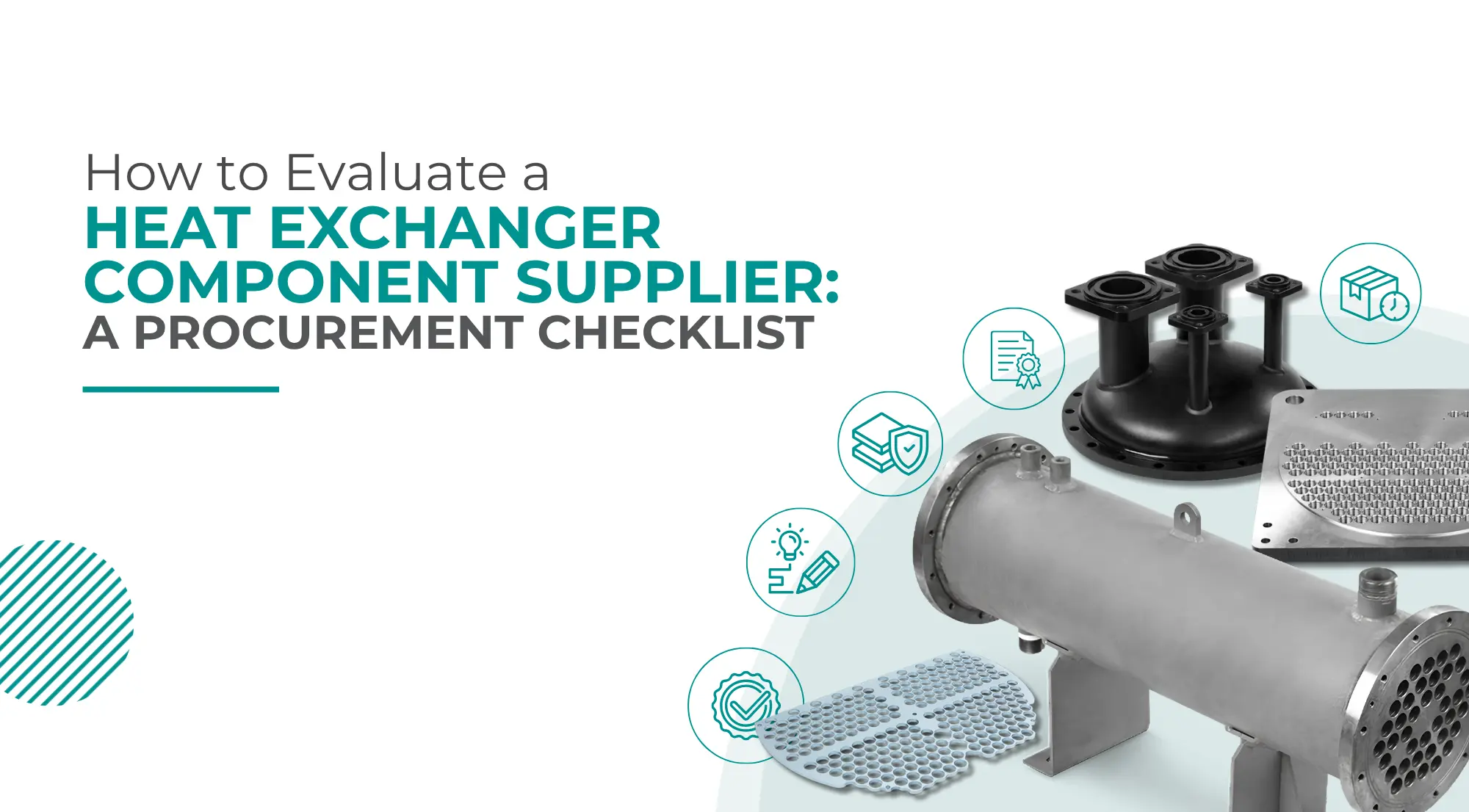


The performance and reliability of any heat exchanger depend heavily on the quality of its components. From chemical processing and petrochemicals to power generation and HVAC systems, even a minor component failure can lead to costly downtime, reduced efficiency and increased maintenance expenses.
The growing importance of component quality is reflected in the market itself. The global heat exchanger market was valued at approximately USD 23 billion in 2024 and is projected to reach USD 43 billion by 2033 (source: market data forecast), driven by industrial growth, energy-efficiency initiatives and increasing demand for high-performance thermal systems. Shell and tube heat exchangers continue to dominate the market, accounting for over 40% of global demand.
For procurement teams, selecting the right heat exchanger component supplier is about more than price. It requires evaluating manufacturing capabilities, quality standards, material expertise and long-term reliability. With over 15 years of manufacturing experience, Schilthorn Precision Engineering supports industries with precision-engineered heat exchanger components, advanced manufacturing capabilities and customer-specific solutions. This checklist outlines the key factors every buyer should consider before selecting a supplier.
Why Choosing the Right Heat Exchanger Component Supplier Matters
A heat exchanger is a complex assembly of precision-engineered components. Even a single low-quality component can compromise overall system performance and reliability.
Impact on Equipment Performance
The efficiency of an industrial heat exchanger depends heavily on the quality and accuracy of its components. Properly manufactured tubes and shells, tube sheets and baffle plates ensure optimal heat transfer, fluid flow and pressure management.
Poor-quality components may result in:
- Reduced thermal efficiency
- Increased energy consumption
- Process instability
- Premature equipment failure
Impact on Operational Costs
Selecting low-cost components without evaluating quality often results in higher lifecycle expenses. Inferior materials may require frequent replacement, increase maintenance requirements and contribute to unplanned shutdowns.
Impact on Maintenance and Downtime
Unexpected downtime is one of the most significant costs for industrial operations. Reliable components help reduce maintenance frequency and improve equipment availability.
Impact on Safety and Compliance
Heat exchangers frequently operate under high temperatures and pressures. Defective or poorly manufactured components can pose serious safety risks and may lead to non-compliance with industry regulations.
Understanding Critical Heat Exchanger Components
| Heat Exchanger Component | Function | Why It Matters for Procurement |
|---|---|---|
| Tubes | Serve as the primary heat transfer surface within the heat exchanger. | Material quality, wall thickness, corrosion resistance and dimensional accuracy directly affect heat transfer efficiency, durability and overall performance. |
| Tube Sheets | Secure the tubes and maintain separation between process fluids. | Precision machining and material integrity are essential to prevent leakage, ensure pressure containment and maintain structural stability. |
| Shells | House the tube bundle and direct shell-side fluid flow. | Must withstand operating pressures, temperatures and process conditions while providing long-term reliability and durability. |
| Baffles | Control shell-side fluid movement and create turbulence. | Properly designed baffles improve heat transfer efficiency, reduce vibration and enhance overall thermal performance. |
| Gaskets | Create a seal between components to prevent fluid leakage. | Material compatibility with temperature, pressure and process fluids is critical for maintaining system integrity and safety. |
| Nozzles | Provide inlet and outlet connections for process fluids. | Must accommodate required flow rates and operating conditions while ensuring mechanical strength and leak-free operation. |
| End Covers & Channels | Distribute fluids into the exchanger and allow access for maintenance and inspection. | Their design impacts fluid distribution, ease of maintenance, operational efficiency and serviceability. |
Understanding these critical heat exchanger components and heat exchanger parts enables procurement teams to define technical specifications accurately, evaluate supplier capabilities effectively and make informed sourcing decisions.
Procurement Checklist for Evaluating a Heat Exchanger Component Supplier
-
Manufacturing Capabilities
One of the first factors procurement teams should evaluate is whether a supplier manufactures heat exchanger components in-house or depends on third-party vendors. In-house manufacturing provides better control over quality, production timelines and customization capabilities.
Questions to Ask
- Do you manufacture components internally?
- What production equipment and machinery do you use?
- What quality controls are integrated into the manufacturing process?
- Can you accommodate custom designs and specifications?
Schilthron precision manufactures heat exchanger components in-house using advanced machinery and modern manufacturing infrastructure. This enables strict quality control at every stage of production, ensuring consistency, precision and reliability. Additionally, Schilthron offers customized component designs and specifications tailored to specific process requirements, helping customers achieve optimal performance for their applications.
-
Industry Experience
In our experience manufacturing heat exchanger components for HVAC and industrial equipment OEMs, we frequently see procurement teams focus heavily on pricing while overlooking material traceability documentation. In one project, a customer reduced component replacement frequency by switching from standard stainless steel to duplex stainless steel for a corrosion-prone application.
Questions to Ask
- How many years have you been manufacturing heat exchanger components?
- Which industries do you primarily serve?
- Can you provide customer references or project experience?
With more than 15+ years of manufacturing experience, Schilthorn Precision Engineering Pvt. Ltd. has built extensive expertise in producing high-quality heat exchanger components for a wide range of industries. This experience allows the company to understand customer requirements thoroughly and provide reliable solutions that meet both performance and quality expectations.
-
Material Expertise
Material selection significantly affects heat exchanger efficiency, durability, corrosion resistance and operating life. Suppliers should have expertise in working with a broad range of materials and understand which material is best suited for specific operating conditions.
Evaluate Their Ability to Supply
- Stainless Steel
- Carbon Steel
- Duplex Stainless Steel
- Titanium
- Copper Alloys
- Nickel Alloys
Schilthron has extensive experience working with both standard and specialized materials, including stainless steel, carbon steel, duplex stainless steel, titanium, copper alloys and nickel alloys. The company’s expertise in handling these materials ensures high-quality manufacturing, precise fabrication and reliable performance even in demanding industrial environments where corrosion resistance and durability are critical.
Choose a Heat Exchanger Component Supplier You Can Trust
-
Quality Assurance Processes
A supplier’s quality assurance practices directly impact the reliability and lifespan of heat exchanger components. Comprehensive inspection and testing procedures help ensure that every component meets industry standards and customer specifications.
Verify Whether the Supplier Performs
- Positive Material Identification (PMI)
- Hydrostatic Testing
- Non-Destructive Testing (NDT)
- Dimensional Inspection
- Welding Qualification Procedures
- Material Traceability Documentation
Quality is a core focus at Schilthron Precision. The company follows stringent quality control procedures throughout the manufacturing process and conducts comprehensive inspections to ensure every component meets required performance, safety and quality standards. This commitment helps customers minimize operational risks and maximize equipment reliability.
-
Certifications and Compliance
Certifications demonstrate a supplier’s commitment to quality, safety and industry best practices. Procurement teams should always verify whether a supplier follows internationally recognized standards and can provide the required documentation.
Look for Compliance With
- ISO 9001 Quality Management Systems
- As 9100 Standard
- ASME Standards
- TEMA Standards
- PED Requirements (where applicable)
Schilthron maintains ISO 9001 Quality Management Systems and AS 9100 certifications, demonstrating its commitment to delivering high-quality precision-engineered components for demanding industrial applications. These globally recognized standards ensure robust quality control, process consistency, documentation and traceability throughout the manufacturing process. As a result, customers can rely on Schilthron for components that meet strict performance, safety and compliance requirements while supporting long-term operational reliability.
-
Engineering and Design Support
Today’s procurement teams need more than just a manufacturer they need a technical partner capable of solving engineering challenges and improving equipment performance.
Evaluate Whether the Supplier Can Provide
- Design recommendations
- Thermal performance guidance
- Reverse engineering services
- Component redesign and upgrades
- Failure analysis support
Schilthron’s engineering team works closely with customers from concept to execution. Whether it’s optimizing an existing design, developing custom heat exchanger components or recommending performance improvements, Schilthron provides practical engineering support that helps customers maximize efficiency, reliability and equipment life.
-
Delivery and Lead Time Reliability
A supplier’s ability to deliver components on time can significantly impact project schedules and plant operations. Studies show that over 70% of supply chain disruptions in industrial manufacturing (supplierwiki SPS Commerce) are linked to supplier delivery delays, underscoring why on-time delivery performance should be a top priority during supplier evaluation. Delays in critical components often result in costly downtime and production losses, making lead time reliability a key factor in choosing the right heat exchanger supplier.
Questions to Ask
- What are your standard lead times?
- Can you support emergency replacement requirements?
- How do you manage inventory and production scheduling?
- What is your on-time delivery performance?
Because Schilthron manufactures components in-house, production schedules can be monitored and controlled more effectively. This allows the company to maintain dependable delivery timelines while ensuring that quality is never compromised. Customers benefit from a streamlined manufacturing process that supports both planned projects and urgent requirements.
-
Customization Capability
Many industrial applications have unique operating conditions that require customized heat exchanger components rather than off-the-shelf solutions.
Evaluate Their Ability to Provide
- Custom tube bundles
- Specialized materials
- Unique dimensions
- High-pressure designs
- Corrosion-resistant configurations
Customization is one of Schilthron’s key strengths. With advanced manufacturing capabilities and an experienced engineering team, the company can design and manufacture heat exchanger components tailored to specific process conditions, space constraints, pressure requirements and material specifications. This flexibility allows customers to achieve optimal performance without compromising operational requirements.
-
Cost vs. Value Assessment
While pricing is an important procurement consideration, the initial purchase cost represents only a portion of the total investment. Maintenance, repairs, downtime, and operational expenses often contribute significantly to the overall lifecycle cost of industrial equipment, making long-term reliability and quality key factors in supplier selection.
Evaluate Suppliers Based On
- Product quality
- Equipment lifespan
- Reliability
- Service support
- Total cost of ownership
Schilthron focuses on delivering long-term value rather than simply competing on price. Through high-quality materials, precision manufacturing, strict quality control and dedicated engineering support, the company helps customers reduce maintenance costs, improve operational reliability and maximize the lifecycle of their heat exchanger systems. This results in a lower total cost of ownership and a stronger return on investment over time.
Red Flags to Watch When Selecting Heat Exchanger Suppliers
- Suppliers without recognized quality certifications may not have standardized processes in place, increasing the risk of inconsistent product quality.
- Limited transparency regarding manufacturing facilities, equipment and production processes can make supplier evaluation difficult.
- Unclear material sourcing and lack of traceability may lead to quality concerns and compliance issues.
- Insufficient technical support can create challenges when handling custom requirements or troubleshooting operational issues.
- Pricing that is significantly lower than market standards may indicate compromises in materials, manufacturing quality or inspection procedures.
- A history of delayed deliveries can disrupt project timelines, increase downtime and affect overall operational efficiency.
Questions Every Procurement Team Should Ask Before Finalizing a Supplier
| Evaluation Area | Key Question |
|---|---|
| Quality | Are inspection reports available? |
| Materials | Is full material traceability provided? |
| Manufacturing | Is production performed in-house? |
| Experience | Can similar industry references be provided? |
| Support | Is technical assistance available after delivery? |
| Delivery | Does the supplier have a proven delivery record? |
This checklist helps ensure a comprehensive evaluation process and reduces procurement risk.
Why Leading Heat Exchanger Companies Focus on Component Quality
Leading heat exchanger companies recognize that component quality is one of the most important factors influencing overall system performance customer satisfaction. High-quality components help ensure efficient heat transfer, minimize the risk of equipment failure and support consistent operation even under demanding industrial conditions.
They also contribute to improved energy efficiency, longer equipment lifespan, reduced maintenance requirements and lower total cost of ownership over time. As a result, top heat exchanger companies in India invest heavily in rigorous quality control processes, advanced manufacturing technologies, skilled engineering expertise and continuous improvement initiatives to deliver dependable and high-performing solutions for their customers.
Need a Trusted Heat Exchanger Component Supplier in India?
As a leading heat exchanger manufacturer in India, Schilthron supports industries with high-quality heat exchanger components engineered for reliability and performance. With 15+ years of engineering expertise, certified quality systems, advanced manufacturing infrastructure and extensive experience in manufacturing heat exchanger and HVAC components, Schilthron precision delivers dependable solutions for critical industrial applications.
If you’re looking for a trusted heat exchanger component supplier in India, get in touch with Schilthron Precision Engineering today.
FAQ’s
1. What are the most important heat exchanger components?
Key components include tubes, tube sheets, shells, baffles, gaskets, nozzles and end covers. Each component contributes to heat transfer efficiency, structural integrity and operational reliability.
2. Why is material traceability important in heat exchanger manufacturing?
Material traceability ensures that every component can be linked back to its source material, helping maintain quality, compliance and safety standards.
3. What industries require heat exchanger components?
Industries including chemical processing, petrochemicals, oil and gas, pharmaceuticals, food processing, power generation and HVAC rely on heat exchanger components.
4. How often should heat exchanger parts be replaced?
Replacement intervals vary depending on operating conditions, maintenance practices and component quality. Regular inspections help determine replacement needs.
5. What is the difference between OEM and aftermarket heat exchanger parts?
OEM parts are manufactured according to original equipment specifications, while aftermarket parts may vary in design, quality and compatibility.
6. Why should procurement teams evaluate suppliers beyond pricing?
Focusing solely on price can lead to lower quality, higher maintenance costs, increased downtime and reduced equipment lifespan. Evaluating total value ensures better long-term outcomes.